
You can also call the Philodendron Sun Red the Sun Red Plant. It is a great plant to add colour to your indoor or outdoor plants. It can be grown inside or outside. But in the ground, the plant will grow much bigger than in a pot. It grows straight up and in groups.
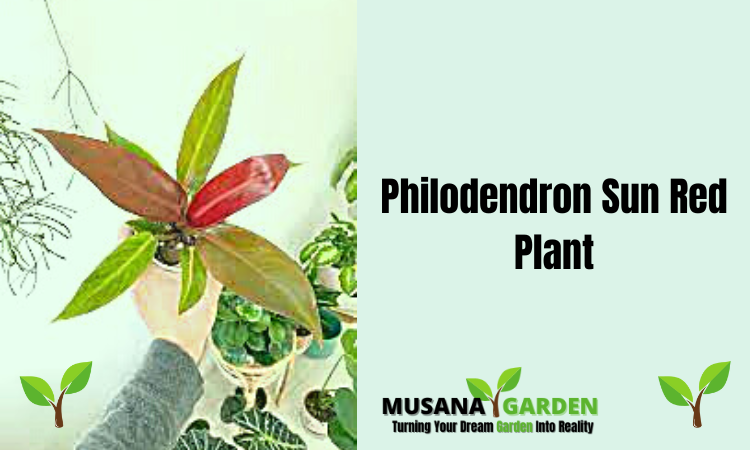
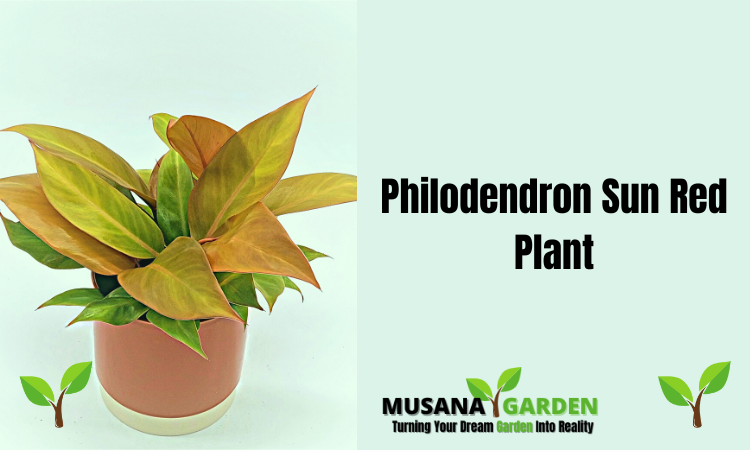
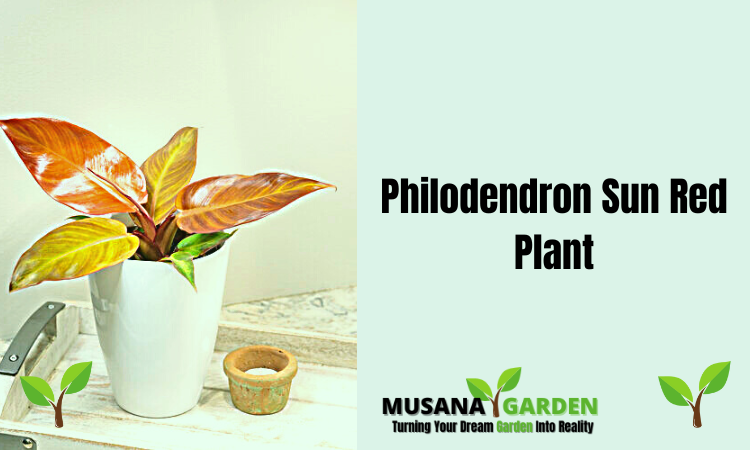
It has big leaves that look like ovals and are of different colours. When leaves are young, they are bright red. Then become more burgundy or maroon. They’ll turn green in the end.
Because different leaves come out and grow at different times, you’ll see a range of colours at any given time. This is why the plant is so beautiful and striking. The South American forests are home to this tree-hugging climber.
How do you take care of a Sun Red Philodendron? Keep the plant in a place with a lot of light. It does best in indirect light that is medium to bright.
Stay away from both dim light and strong, direct sunlight. It likes it best when it’s warm and humid. Feed it during the growing season to keep the colour and growth of its leaves.
What Does Philodendron Red Sun Look Like?
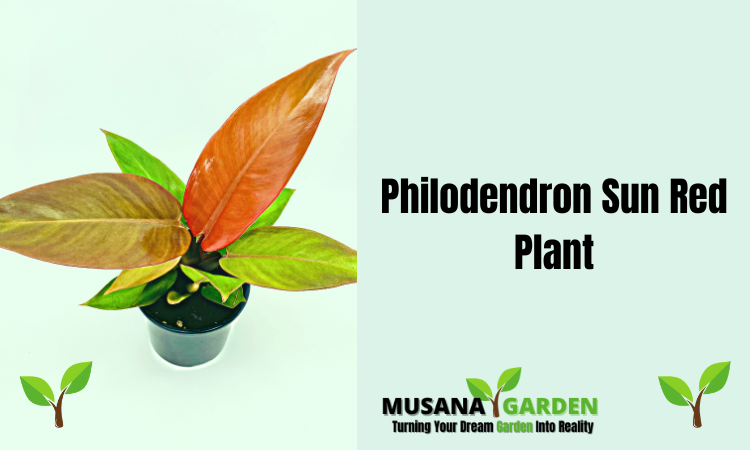
The Philodendron red sun is a stunningly beautiful plant that is native to Central and South America. The plant’s leaves are wide and in the shape of a heart. They are a deep red colour that gets stronger in direct sunlight.
When grown indoors, a full-grown Philodendron red sun plant grows between 12 and 36 inches tall. The plant is easy to take care of, and it does best in warm, damp places. When grown inside, this plant makes a great houseplant that will make any room look better.
Philodendron Red Sun Other Characteristics
Air Purification
People know that this plant can take in toxins from the air. Formaldehyde is a common pollutant that is found in many household products. Red Sun is especially good at getting rid of it. Formaldehyde can cause breathing problems and has been linked to cancer, so it’s important to keep levels low in your home.
Philodendron Red Sun can get rid of more than just formaldehyde. It can also get rid of carbon monoxide and benzene. This philodendron is a great choice if you want a plant that is both nice to look at and good for your health.
Toxicity
It’s important to know that both people and animals can get sick if they eat this plant. The plant has oxalate crystals in it, which can make the mouth, throat, and stomach hurt and burn. In the worst cases, eating the plant can make it hard to breathe, cause the airways to swell up, and even cause death. Keeping this plant out of reach is important if you have pets or small children in your home.
Dormancy
It doesn’t rest or sleep. It can stay in your house all year.
Tolerance for Drought
It grows in the tropics, but it can survive for a short time without water. So, your plant will not die if you forget to water it for a day or two.
Maintenance
Philodendron Red Sun is a beautiful plant that doesn’t need much care and would look great in any home. This plant is easy to take care of. It doesn’t need a lot of water or sunlight. It can also grow in a wide range of climates, which makes it a great plant for any place. This plant is a great choice for any home and will make any room look more beautiful and stylish.
Check Out This Comparison Guide
Philodendron Red Sun Plant Complete Guide
Temperature
The best temperature for the Philodendron Red Sun is between 65 and 85 degrees Fahrenheit. It’s a tropical plant, which means it grows best in warm places. More importantly, it does best when it is always sunny and warm. This is because there are only two seasons in the tropics.
- Warm
- sunny
- Rainy
Even when it’s raining, the weather is warm and sometimes even hot. It never gets really cold; only wet. In the same way, the tropics don’t have winters. Instead, the weather is always sunny from November to March, even though it is a bit cooler overall. Still, it’s not cold. It’s more like moderate.
This is why the Philodendron Red Sun can’t handle cold weather very well. If you leave it in temperatures below 50 degrees Fahrenheit, it starts to have trouble. The good news is that its preference for warmer temperatures makes it a great plant for growing indoors.
The plant grows well almost anywhere. This means that you don’t have to do anything different with the temperature.
But you should watch out for places that are cold and drafty. This includes leaving windows or doors open so that cold air can get in. It also includes places where the nighttime temperature can drop by a lot compared to the daytime temperature.
And don’t leave the plant in rooms with air conditioning or near air vents. The Philodendron Sun Red can grow outside in USDA Hardiness Zones 9 through 11. This is because these places have sunny weather all year long and temperatures that are usually between moderate and warm.
So, if you live in one of these places, you can keep the plant outside or even plant it in your garden. But in cooler places, the Philodendron Red Sun does best as an indoor plant. Make sure the inside of your home is warm, especially in the winter.
How Often Should Philodendron Red Sun Be Watered?
By far, the hardest part of taking care of a Philodendron Red Sun is making sure it gets enough water. Because, unlike the other parts, it has to be changed depending on the time of year. Other parts of care don’t need to be changed as much. And the repercussions are not as bad.
Most of the time, the Philodendron Sun Red needs about average amounts of water. This equals about once a week. The actual number of times will depend on the time of year.
During the summer’s hottest months, you’ll need to water the plant more often because the soil will dry out more quickly. Just as important, the Philodendron Red Sun does not like its soil to be completely dry. Don’t do this.
On the other hand, it takes much longer for soil to dry in the winter when it is cold outside. This means that you need to cut back a lot. The reason is that the plant can get root rot from getting too much water.
By far, this is the most dangerous thing to look out for. This is because root rot happens under the soil. This means that you won’t know it’s getting worse until the signs show up on the leaves or stems.
By then, at least some damage will have been done to the roots. Worse, once too many of the roots in the root system have gone bad, the plant can’t be saved anymore, no matter what you do. So you should stay away from this even more.
So, if you make a mistake, make it by giving the plant too little water. It is better able to get back on its feet after this. This is also why the best way to water a Philodendron Red Sun is to wait until the top 2 inches of soil have dried out. Don’t water before that time.
I like to keep things simple. Isn’t it better to be safe than sorry? So, I don’t water until the top quarter to half of the soil is dry. There’s no need to be exact. Anywhere between these numbers works great.
In doing so, you avoid overwatering. And this way of watering will let you change your watering schedule on its own. You decide when to water based on how wet or dry the soil is instead of counting the days.
Pruning
The Philodendron Sun Red can grow to be 4 to 5 feet tall and 4 to 5 feet wide in a pot. When planted in the ground outside, it can grow to be between 8 and 10 feet tall.
Like most types of philodendrons, the size will change a lot based on whether you keep it inside or outside. With the right care, the Philodendron Red Sun can grow either slowly or quickly.
The faster it will grow, the more light and food it gets. Again, don’t give the plant too much water or sunlight. Both are bad for you.
Since the Philodendron Red Sun is mostly made up of its beautiful, multicoloured leaves, it doesn’t need much or any pruning.
The leaves are the most beautiful part of the plant, so you don’t want to cut them back. And the leaves usually grow well without making a mess.
This means that it still looks good when it’s full and bushy. You only need to prune when you need to get rid of damaged, old, dead, discoloured, or sick leaves.
Humidity
The Philodendron Red Sun does well in damp places. And it will grow better if it is kept in a damp place. It does best when the humidity is between 60% and 70%. But it can also live in a room with normal humidity.
In general, the plant is not hurt by low humidity. There are a few exceptions, though. And the leaves are the best way to tell. If the leaves look healthy and have good colour while growing to their normal size, it means the plant has adjusted to the humidity in your home.
On the other hand, watch out for leaf edges and tips that are dry and brown. These things show that it needs more moisture. The reason is that the water can’t get to the tips and edges of the leaves, which are at the ends of the plant. Seeing this means that it needs your help.
You can move the plant to the kitchen or bathroom, which are usually the two places in a home with the most humidity. You could also put all of your plants together. But this only works if you have a lot of plants in your home.
A few times a week, you can also mist the plant. Set up a pebble tray, which requires less attention. Getting a humidifier is the most obvious thing to do. Don’t forget to keep the plant away from things that dry out the air, like air conditioners, heaters, radiators, and other appliances.
Check Out This Trending Guide Below
- Philodendron Strawberry Shake plant Guide
- philodendron painted lady plant Guide
- Philodendron Ring of Fire Plant Guide
- Philodendron Blizzard Plant Guide
- Philodendron Golden Violin Guide
- Philodendron Ceylon Beauty Guide
Potting Soil
The Philodendron Red Sun does best in soil that drains well. This type of soil is the best for this plant. Again, this has to do with how easy it is for the plant to get too much water.
Soils that hold too much water tend to be too heavy. The same is true for soil that is hard or packed down. So, avoid all of them. Because when they hold a lot of water, the roots end up sitting in the extra water. This leads to a buildup of water.
The problem is that the roots can’t get enough air because the soil is too wet. Roots need air just as much as they need water. If the water doesn’t go down quickly enough, the roots will die from a lack of oxygen. Then they’ll go bad.
If the plant has too many broken roots, it won’t be able to get enough water and nutrients from the soil to stay alive.
So, over time, it will get weaker and eventually die. So, you should always make sure the soil you use drains well. I’ve found that an Aroid mix is the best soil for this plant. You can buy one in a plant shop online or at a nursery near you. It’s a good thing that it’s already mixed. So, you can just open the bag and start using it.
The roots are happy because the soil drains well and gets enough air. It also keeps some water in so that the roots don’t dry out.
You can also make your soil at home, of course. Here is a really good DIY potting mix for the Philodendron Red Sun.
- 1 part potting mix
- 1 part perlite
- 1 part bark of an orchid
- ½ part horticultural charcoal
Don’t forget to use a pot with holes in it so the water can drain out.
Last but not least, the Philodendron Red Sun can grow tall and is a climbing plant. So, it would be smart to give it something to climb up on.
Repotting
The Philodendron Red Sun doesn’t need a new pot until every two or three years. It doesn’t need to be replanted every few weeks. The plant also doesn’t like being moved. Only when the roots get too big should you move them.
You’ll know because the plant’s roots will have grown too big for the pot. There are a few signs that this is happening. One thing that will happen is that the roots will start to show through the holes in the bottom of the pot.
Also, if you see roots coming out of the top of the soil or between the soil and the pot, it means the plant needs more room.
Find a pot that is 2 inches wider than the one you are using now. Make sure the bottom of the new pot has holes for excess water to drain out. This is also your chance to replace the old soil with a new potting mix that drains well.
If you think the Philodendron Red Sun is already too big, you can also divide it, but this is not necessary. Spring to early summer is the best time to repot.
Light Requirements
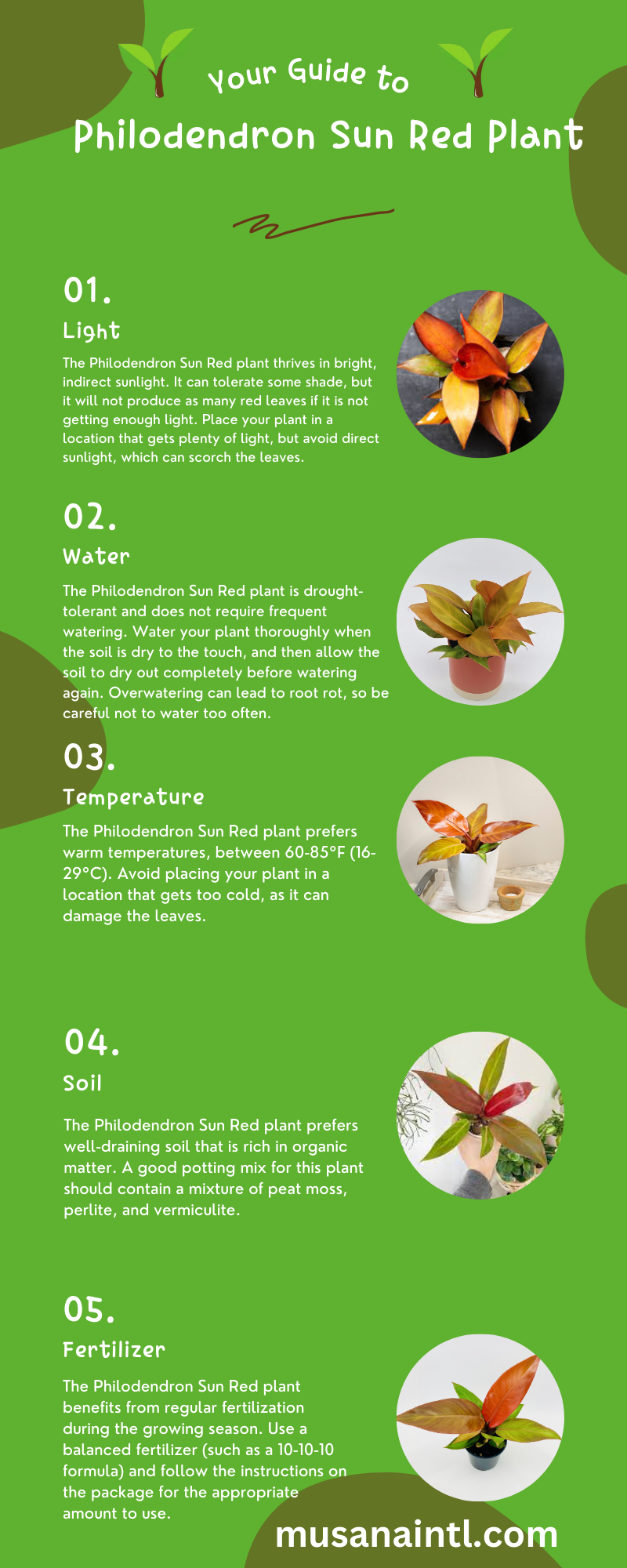
For the Philodendron Red Sun to do well, it needs a lot of light. The plant will grow best if it gets light that is between medium and bright and isn’t directly on it. Just as important, it will keep its beautiful colours if you keep it in a well-lit place.
The plant also needs light for at least 6 hours a day. If your home doesn’t get much natural light, you can also use artificial lights. But if the plant has to grow lights or fluorescent lighting, it will need 10 or more hours of light every day.
On the other hand, try to stay away from dark corners and places with low light.
Even though the plant can live in these places, its leaves will suffer. As the colours try to make up for the lack of light, they will become greener. If they can’t, the plant will get taller and grow more slowly.
Over time, you might even see its leaves fall off as the plant gets weaker. As a result, the Philodendron Red Sun should get a lot of light.
But make sure the light is indirect, diffused, dappled, or filtered.
Stay out of direct, strong sunlight.
This is because it can only handle up to three hours of strong light per day. Its leaves will lose their colour if it gets too much of this.
They can also get burned in very strong sunlight, leaving black or brown burn marks on the leaves. This kind of damage to a leaf cannot be fixed.
So, you have to cut off either the damaged parts or the whole leaves. Then you just have to wait for healthy new leaves to grow.
For best growth, keep the plant in a room with medium to bright indirect light. Outside, put it somewhere that gets some shade. Don’t put the plant in full sun, which is too much for it.
Fertilizer
For the Philodendron Red Sun to grow and stay healthy, it needs food. During the time it grows, this is especially true.
So, giving it food during the warm months of spring and summer helps it grow and develop in the best way. Use a fertilizer that is well-balanced and has micronutrients.
During this time, apply once a month. If the plant is kept in a pot inside, dilute each application by 50%.
By early to mid-fall, stop feeding. And don’t feed your plants in the winter. Another choice is to use a fertilizer that slowly breaks down. This will let you cut the number of times you have to apply to two or three times a year.
It also makes it less likely that the plants will get too much fertilizer because the pellets will dissolve at different times.
Check your fertilizer to make sure it has calcium and magnesium if the leaves are pale. When these two minerals aren’t enough, the leaves of philodendron plants often turn pale.
Propagation
It’s not hard to spread Philodendron Red Sun. But it takes a little more work.
Most of the time, this plant is spread by:
Offsets or side effects
Cuttings that have roots
Each method is very different from the other ones. So, I’ll talk about each of them.
How to Grow Philodendron Red Sun from Offsets or Plantlets
If you look at the base of the plant, you might see a few baby plants. These are called offsets or plantlets.
You can pull these off the mother plant and put them in pots with soil that drains well.
Over time, they will grow into full-grown plants that look just like their parents.
The plant, on the other hand, may or may not make offsets. When and how many times it happens can be different. All of this depends on nature.
So, propagating from offsets is easy, but it’s not very reliable because you don’t know when they’ll show up.
But if they do, you shouldn’t just split them up right away.
Make sure they’re the right size (at least 3 or more inches in size). Let them keep growing first if they are still small.
Getting Philodendron Red Sun to grow by splitting
Here, you will split the mother plant into two or more new plants.
To do this, take the mother plant out of its pot and decide how many pieces you want to take from it. Also, figure out where you will cut the root ball apart.
Make sure that each plant division gets enough roots to hold up the plant above it.
Once you decide, you can pull the root ball apart with your hands. You could also cut the root ball with a clean knife.
Plant each piece in its pot with a fresh potting mix that drains well.
How to Grow Red Sun Philodendron from Cuttings
Taking cuttings is another way to spread a plant. This is the best way to do it.
I also like it because you don’t have to wait about a month for the roots to grow on the new plant. Instead, it has roots already.
But this method takes a little more work than cuttings from the stem.
The best way is to take the plant out of its pot and wash the extra soil off the roots. This will make it easy to see the whole root system.
You can also use a trowel to dig around the roots of the stem you want to cut and cut it that way. In this case, you only need to show the part of the roots that are attached to the part of the stem you want to grow.
Choose a healthy stem with a few leaves in either case.
Then follow it back until you find the roots of the stem you want.
Use a clean pair of pruning shears or a sharp knife to cut the part of the roots that are connected to the stem you want to grow.
You don’t need a big piece of roots. Just get enough roots so the new plant can stand on its own.
Once you have a cutting with roots, you should put it in a pot with soil that drains well.
Is it poisonous or toxic to people, cats, and dogs?
If you eat the Philodendron Red Sun, you could get sick. It has crystals of calcium oxalate, which are poisonous to both people and animals. So, keep it away from cats and dogs and young children.
Problems with Philodendron Red Sun and How to Fix Them
Diseases
You don’t want your roots to rot because you gave them too much water.
Because of this, you should always look at the soil before adding water.
And don’t water until the top few inches of the soil have dried out. Don’t do that until after that.
When you water your plants too much, they get yellow, mushy leaves, fungal diseases, and root rot. Some of these, though, can’t be fixed if you find them too late.
So, the best thing to do is always to avoid problems.
Pests
Pests don’t bother the Philodendron Red Sun. But it can get pest problems.
So, you still need to check the plant often.
Make sure to kill any bugs on the plant before you bring it inside. This includes bringing it in from the yard or garden. Also, when you first bring it home from the store, look for bugs or other problems.
These are the most common ways that pests get into indoor plants.
Because of this, checking is worth the extra time and effort.
Most pest problems are caused by spider mites, mealybugs, aphids, and scale.
And if there are only a few of them, they are easy to get rid of. Use neem oil or soap that kills bugs. But don’t wait too long, because they are much harder to get rid of once they start to spread.
More Guide
- Philodendron dark lord vs majesty Comparison
- Philodendron Fuzzy Petiole Vs Nangaritense Guide
- Philodendron Melanochrysum Vs Micans Guide
- Philodendron Plowmanii Vs Mamei best comparison Guide
- Philodendron Pedatum Vs Florida Guide
- Philodendron Red Sun Vs Prince Of Orange