
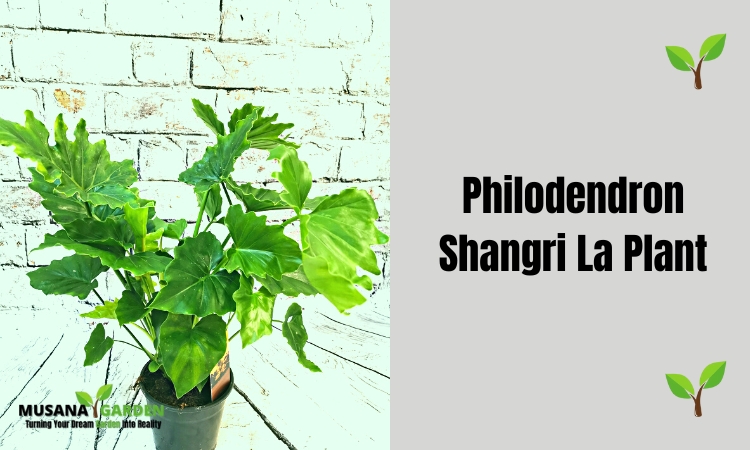
The philodendron Shangri La is one of the most beautiful houseplants you will ever see. Its scientific name is Philodendron bipinnatifidum ‘Shangri La.
It has a great view and comes from the tropics. It is a great houseplant for someone who is just starting because it needs the most care and attention.
Like other philodendrons, the Shangri la does best with enough indirect light and about the same amount of water.
Also, make sure you grow it in soil that drains well and doesn’t hold too much water and feed it at least once a month while it’s growing.
This article is a complete guide to caring for and growing a philodendron Shangri la. You will learn everything you need to know to grow a healthy and beautiful philodendron Shangri la.
First, let’s figure out what the plant is and where it came from.
What is Philodendron Shangri La?
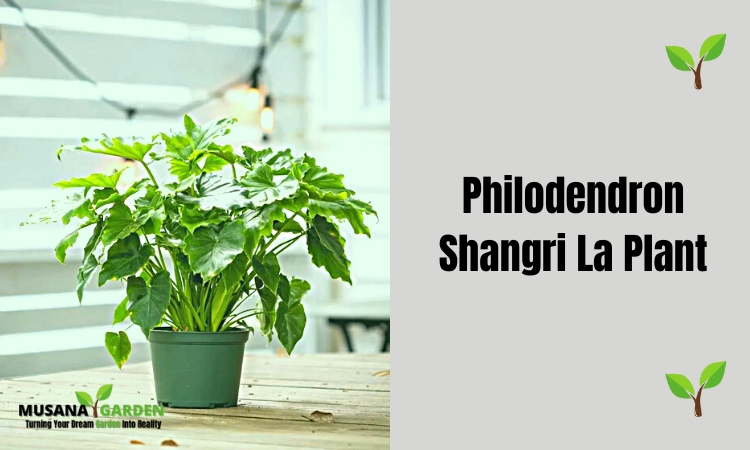
The philodendron Shangri-la is a split-leaf philodendron from the aroid family of Araceae. It comes from the rainforests of South America and is a beautiful evergreen shrub.
It is different and stands out from other philodendron cultivars because it is small.
It is an interesting houseplant that gives any room a tropical feel. It has big, lacy leaves that are deeply cut and grow on tall, strong stems that become dense, bushy, and compact.
It is often called a split-leaf philodendron because the leaves have very rough edges.
Also, its leaves have lime-green ribs and veins that make the plant’s leaves look different. Even though it doesn’t look like a native plant and comes from a tropical area, the Shangri-la is easy to grow and care for, and it will show how pretty it can be rather too soon.
Philodendron Shangri La Care (7 Quick Guide)
Philodendron Shangri La is a beautiful houseplant that is easy to take care of. Here are some tips on how to take care of your Philodendron Shangri La and help it grow:
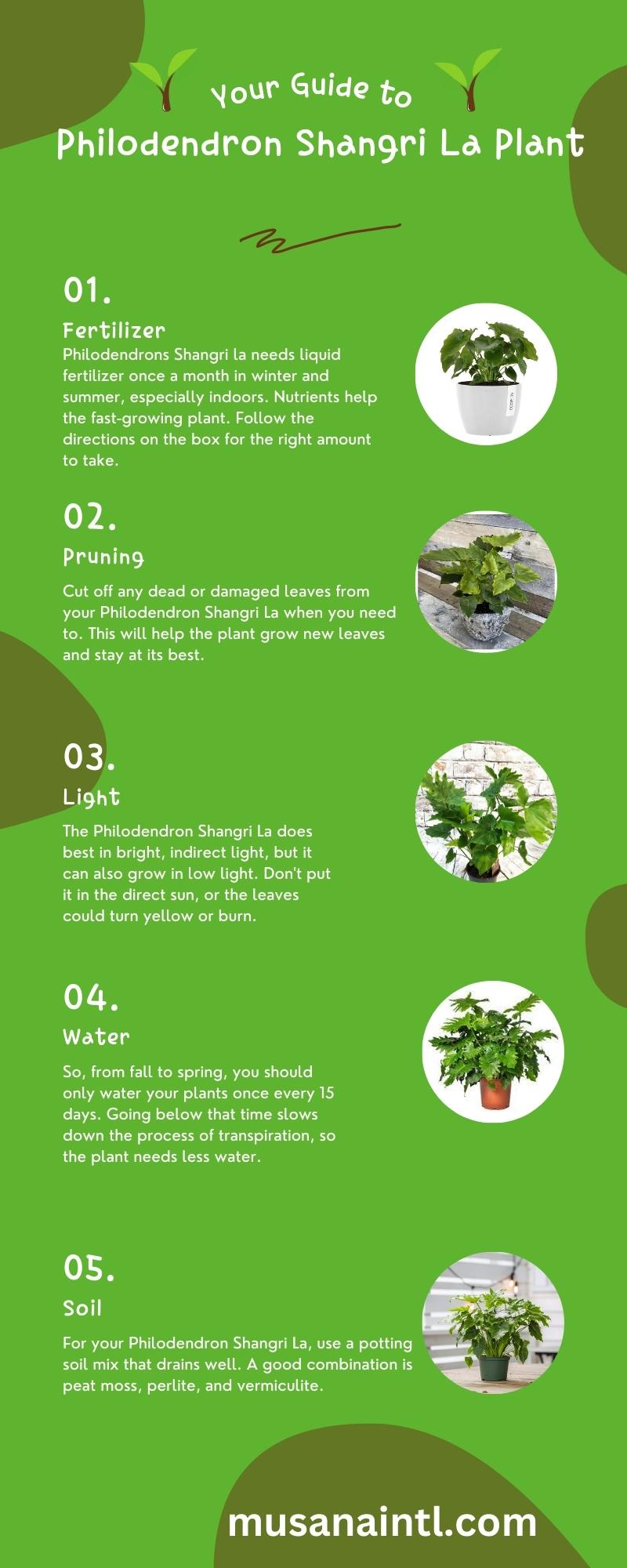
- Light: The Philodendron Shangri La does best in bright, indirect light, but it can also grow in low light. Don’t put it in the direct sun, or the leaves could turn yellow or burn.
- Water: So, from fall to spring, you should only water your plants once every 15 days. Going below that time slows down the process of transpiration, so the plant needs less water.
- Soil: For your Philodendron Shangri La, use a potting soil mix that drains well. A good combination is peat moss, perlite, and vermiculite.
- Fertilizer: Philodendrons Shangri la needs liquid fertilizer once a month in winter and summer, especially indoors. Nutrients help the fast-growing plant. Follow the directions on the box for the right amount to take.
- Temperature: Philodendron Shangri La likes it warm, between 70 and 85 degrees Fahrenheit (16 and 24 degrees Celsius). Don’t put the plant in places that are drafty or cold.
- Humidity: The Philodendron Shangri La likes a medium level of humidity. You can put a humidifier near the plant or mist it with a spray bottle to make it more humid.
- Pruning: Cut off any dead or damaged leaves from your Philodendron Shangri La when you need to. This will help the plant grow new leaves and stay at its best.
How hard is it to take care of Philodendron Shangri La?
Even though it comes from a tropical area and has strange leaves, the philodendron Shangri-la is easy to take care of and keep healthy.
It’s a good idea for people who are just starting, as long as you can take care of it by watering it moderately, keeping it out of direct sunlight, giving it well-drained soil, and feeding it at the right time and at the right amount.
How to Take Care of and Grow Philodendron Shangri La
Here’s how to grow philodendron Shangri la and take care of it. If you follow this guide, you’ll quickly learn how to take care of this plant.
Let’s get started!
Soil Requirements
The philodendron “Shangri La” likes well-drained, aerated soil that is rich in nutrients. In formal gardens, there are always the right combinations for philodendrons and other plants that don’t grow in their natural environment.
These substrates are made to meet the specific needs of tropical plants and help them grow in the best way possible.
If there isn’t a mix already made, you can make your own by mixing peat moss, perlite, and all-purpose substrate in equal amounts. The mixture gives your plant the nutrients, high porosity, lightness, and air circulation that it needs.
Fertilizing Needs
When your philodendron needs food the most Shangri-La needs liquid fertilizer once a month in the winter and summer, and more often if you are growing it indoors. The plant grows quickly, so it needs more food to help it grow.
You can use water-soluble fertilizers with more nitrogen (NPK 3: 1: 2) to give the plant the nutrients it needs to grow leaves that are big and huge. Since the Shangri la is an evergreen plant, it doesn’t go to sleep.
Because there is less light in the fall and winter, its metabolism slows down. Because of this, it doesn’t need any extra fertilizer feeding.
Pruning Requirements
Philodendron Shangri La is a well-known herbaceous plant. Unlike other climbing or trailing philodendrons, it doesn’t need to be pruned.
But it’s not always a bad idea to remove damaged or wilted leaves regularly. Getting rid of bad leaves makes the plant look better and more interesting.
Natural Habitat & Light Requirements
Like many other philodendrons, the philodendron Shangri-la is native to the shady tropical forests of South America. It is not used to being in direct sunlight, especially during the hottest part of the day. So, if you want your houseplant to grow well, choose a sunny spot that doesn’t get direct sunlight.
The spot you chose for the plant must get a lot of light that has been filtered and spread out. This is why the best place to put it is between the east and west windows.
Choose a bright spot near a north window or a few meters away from a south window to make your plant happy. Too much direct sunlight will change the colour and make the leaves smaller.
Watering Requirements
The philodendron Shangri la’s need for water is one of the most difficult parts of taking care of it. In other words, you have to be careful when you water the plant because it likes to be wet but not soaked.
We recommend that you follow the rule for philodendrons, which is to water them once a week from spring to fall.
But it depends on things like the temperature, how much light it gets, and the size of the plant or pot.
So, from fall to spring, you should only water your plants once every 15 days. Going below that time slows down the process of transpiration, so the plant needs less water.
Not sure when to water your plants next? You need to use your finger to check the surface of the substrate often. When the top 2 inches of the soil are dry, it’s time to water again.
Shangri-la does well in moist soil, but it does even better if you don’t water it too much and water it less often.
After watering, check the tray in about ten or fifteen minutes to see if any water has built up and needs to be drained. Like other types of philodendron, the Shangri la is very sensitive to having too much water around its roots, which can cause root rot.
More Guide
- Philodendron dark lord vs majesty Comparison
- Philodendron Fuzzy Petiole Vs Nangaritense Guide
- Philodendron Melanochrysum Vs Micans Guide
- Philodendron Plowmanii Vs Mamei best comparison Guide
- Philodendron Pedatum Vs Florida Guide
- Philodendron Red Sun Vs Prince Of Orange
- Philodendron Orange Marmalade
- Philodendron Imperial Green
- Philodendron Paraiso Verde Guide
- Philodendron Golden Dragon Guide
- Philodendron Florida Green Guide
- Philodendron silver stripe Care
Temperature and humidity
The philodendron Shangri la likes a little bit of humidity and will do well if you mist it often.
Putting them in a bathroom or kitchen, where there is likely to be more moisture in the air, will help a lot with the humidity problem. You can add a humidifier to make it even better.
As far as temperature goes, the Shangri la does best when it is over 55 degrees. Especially in the winter, make sure to keep it away from drafts and open doors. We need the room to be between 16 and 24oC, which is the best range.
Repotting
Since the upper part of the philodendron Shangri la grows faster than the roots, that means its transplanting should only be done when the root ball is compact and occupies the pot, often every second or third year.
It would be best if you endeavoured to replace the initial pot with a 2 to 3 inches bigger one during repotting.
The plant belongs to the philodendron varieties that prefer to be root-bound; therefore, transplanting it into a bigger pot will turn the plant’s energy focus on root growth rather than leaf development.
Again, the Shangri la prefers to be left alone; therefore, transplanting activities could be a form of disturbance and make it look stressed, thus making it stagnate until it adapts. The best time to transplant the plant is in early spring before it starts more severe seasonal growth.
How to Propagate Philodendron Shangri La With Easy Tips
The philodendron Shangri la can be spread in two ways: by dividing it and by cutting off the tips of its stems. Let’s take a quick look at each of these methods;
Division Method
If you have an adult plant with a lot of stems, the best way to make more plants is to divide the plant. The Shangri-la by-division method can be spread through the next step:
- Take the plant out of the pot with care.
- Fill a container with water and put the plant in it for about 15 to 20 minutes.
- Then, take the bull out and let the water drain from it. Get rid of all of the soil that touches the root bale. As soon as the root is clean, look it over carefully to get rid of any broken, crushed, or unhealthy parts.
- Most of the time, a plant’s stems grow from the same part of the root. Take these parts apart from the rest of the bale. If the root veins are so close together that it’s hard to separate them by hand, you can also use a sharp, clean knife to do the job.
- Place each piece that doesn’t fit together in a small container that you have half-filled with perlite and a mix of a substrate.
- Cover the stems’ roots and the white parts with the substrate.
- Then you can start taking care of it like you normally would, which means watering it regularly and putting it in a warm (70–80 degrees F), bright, and partly sunny area. The plant needs at least two or three weeks to settle in and start growing again.
Cuttings Method
By cutting off the tips of the stems, the philodendron Shangri-la can be spread in the spring or early summer. To do this, follow these steps:
- Get a healthy philodendron plant and cut off a 6-inch stem.
- Use scissors, garden clippers, or a sharp knife to cut the stem cleanly just below each set of leaves.
- Cut off two or three sets of leaves so that the stem has at least two leafless nodes.
If you wait ten days, you should be able to see the stem start to grow. Once the stem has grown roots, plant the cutting in the philodendron soil mix. Or, mix all-purpose substrate, peat moss, and perlite in equal amounts.
Putting the cuttings in a clear glass filled with water is the easiest way to see how the roots are growing.
During propagation, try to keep the water level in the glass about the same. Once the cutting has grown enough roots, you can move it to a different pot.
On the other hand, if you put the cutting straight into the substrate, you won’t be able to see the roots as they grow. In other words, when you see new leaves growing, it means that the process is done and the cutting has grown into a new plant that can live on its own.
How to Grow Philodendron Shangri La: What You Need to Know
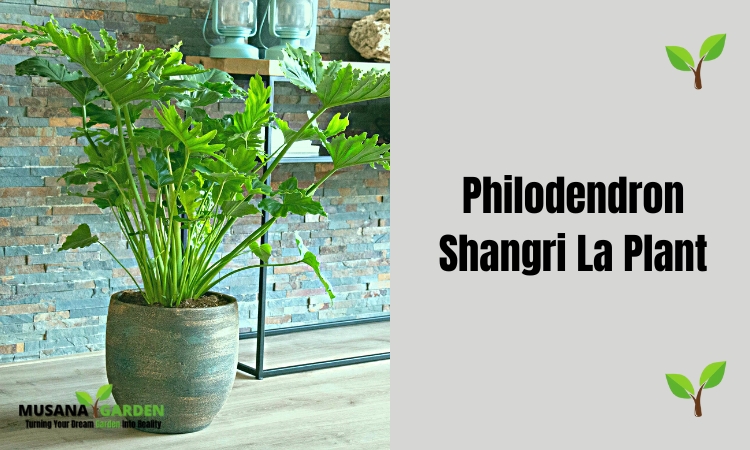
The philodendron is a flowering plant. Shangri La is a variety of split leaves that can grow outside where it is hardy or inside where it is not. So, you should keep it out of the hot sun during the middle of the day. If you plant it inside, it needs bright but indirect light, and if you plant it outside, it needs to be in the shade.
Note that all types of philodendrons like to stay moist, but not soggy. The plant needs soil that drains well, and you shouldn’t water it again until you can feel that it’s dry.
During the warmer months, it will grow better if you use the right amount of water-soluble fertilizer.
Questions People Usually Ask
Why do Philodendron Shangri La’s leaves turn yellow?
The reason why leaves turn yellow is very easy to understand. As with other philodendrons, the philodendron Shangri la has yellow leaves that are usually caused by too much water around the roots. Usually, these yellow leaves fall off.
Shangri-la does like to be wet, but that doesn’t mean you should water it too much. The best way to help philodendrons grow is to make sure they get the right amount of water. Once you see yellow, floppy leaves, you should cut back on watering.
What’s wrong with my Philodendron Shangri La?
If you keep your philodendron Shangri La in a shady spot, it will do well, but it won’t grow into a beautiful, dense tropical shrub. Instead, it will grow into a scattered plant that doesn’t have a bushy shape. In other words, not enough light slows down the growth of new leaves, and the leaf stalks grow longer to reach more light.
It makes the plant floppy and messes up its shape, so it loses its somewhat regular dome shape. Move the plant to a place where it will get enough light to stop this from happening. Again, make sure you turn the plant at least twice a month so that it doesn’t grow in a way that makes it lean toward the light.
Why do the edges of the leaves on my Philodendron Shangri La turn brown?
If the edges or tips of your philodendron Shangri la have turned brown, it means that the air is too dry or you aren’t giving it enough water.
Philodendrons need plenty of air and water in the soil to grow well and look good. If one or both are missing, the damage shows up first on the leaf tips and edges before it spreads to other parts.
Is the Philodendron Shangri La a poisonous plant?
The philodendron Shangri la is without a doubt a poisonous plant. Because of this, it would be best to keep it away from kids, dogs, and even cats. Even though it is a type of plant, calcium oxalate is what makes it up. This substance irritates the skin and, if eaten, can cause terrible health problems, such as vomiting and diarrhoea.
Why Is My Philodendron Shangri La Drooping?
The Shangri-la philodendron, like all philodendrons, needs the right amount of water to grow well. Drooping leaves can be a sign of either too much or too little water. But if you fix the watering schedule right away, the leaves will recover from this problem faster than you might think.
Keep in mind that pale new leaves are often a sign that the plant is not getting enough calcium and magnesium. These are important micronutrients that help philodendrons, including the philodendron Shangri-la variety, grow healthily. You’ll get the most beautiful houseplant you’ve ever wanted if you take good care of it.
Check Out This Trending Guide Below
- Philodendron Strawberry Shake plant Guide
- philodendron painted lady plant Guide
- Philodendron Ring of Fire Plant Guide
- Philodendron Blizzard Plant Guide
- Philodendron Golden Violin Guide
- Philodendron Ceylon Beauty Guide
- Philodendron Golden Crocodile Guide
- Philodendron Whipple Way Guide
- Philodendron Caramel Marble vs Ring of Fire Guide
- Philodendron Fuzzy Petiole Guide
- Philodendron Jose Buono Care Guide
- Philodendron el choco red Guide
- philodendron summer glory Guide
- Philodendron Lickety Split Care