
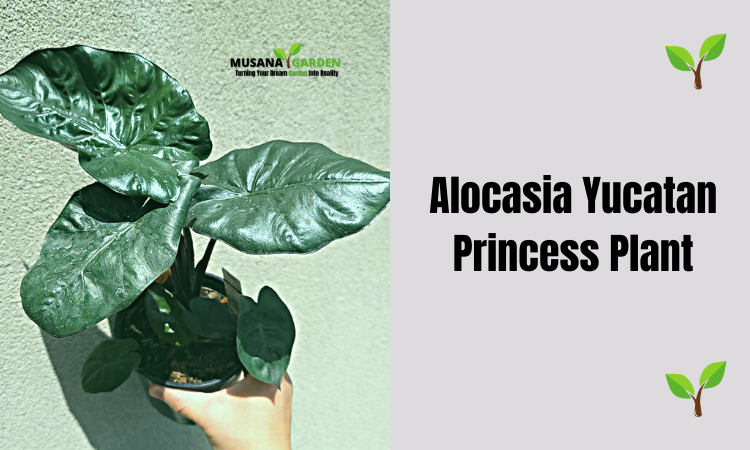
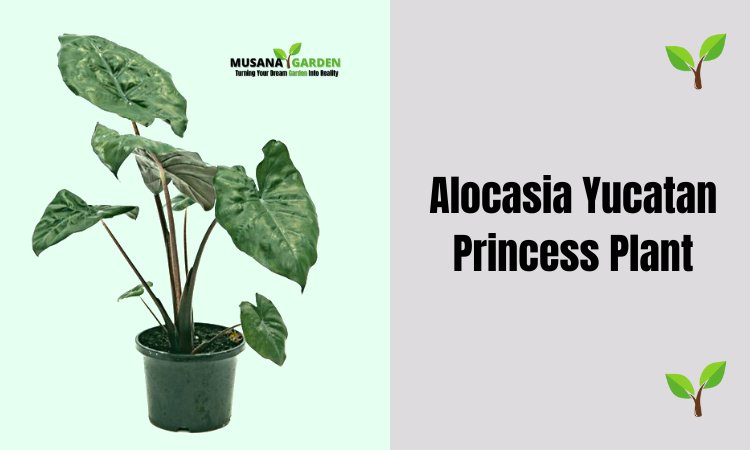
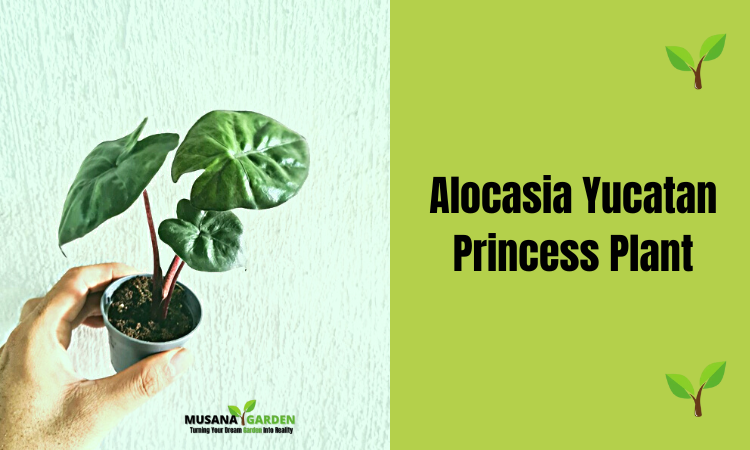
The exotic and bold Alocasia Yucatan princess is the best plant for giving your home a dramatic look. This beautiful plant has big, wrinkly, dark green leaves with a brown underside and soft, red stalks. The Alocasia Yucatan Princess is also called Elephant Ear because its big, leather-like leaves look like elephant ears. It is usually grown for its pretty leaves, which make it a great plant for decorating.
The leaves of ‘Yucatan Princess’ can be two different colours. ‘Yucatan Princess’ is a dark, almost black-leaved form of Sarawakensis with huge, shiny, puckered leaves that have maroon undersides and maroon stems, or petioles. On the other hand, the other type of Yucatan Princess has large, shiny, dark green leaves with dark brown undersides and a lot of brown veining.
Ecology and Habitat
This aroid, which is a natural change of Alocasia Sarawakensis, comes from the island of Borneo. This plant is in the family Araceae and is a type of Arum. This plant grows naturally along the coasts of northern Borneo. It gets its name, Sarawakensis, from the Malaysian state of Sarawak. Even though it lives naturally in Sabah, Malaysia, which is on the northern tip of the island of Borneo, it is also found in Brunei, parts of Kalimantan, and even Sumatra.
Growth
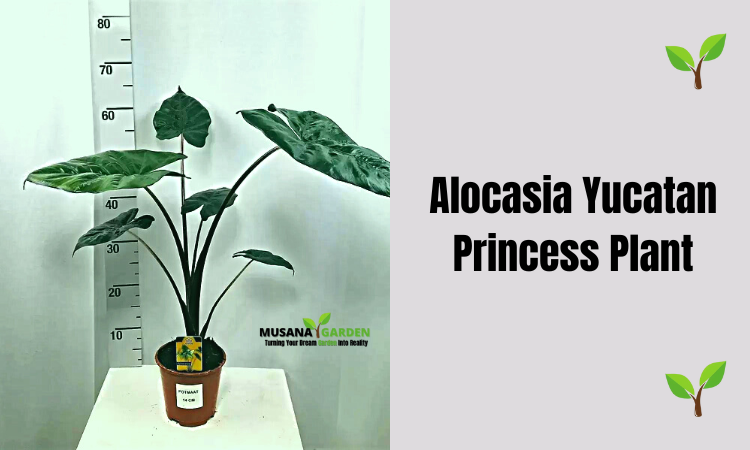
The Alocasia Yucatan princess grows quickly if all of its needs are met and the conditions are right. If it gets the care it needs, this beautiful plant can grow up to 4 to 8 feet tall and 4 to 5 feet wide. Only four to six leaves can grow at a time on a single plant.
Also, you can expect the dark green, shiny leaves held high on a strong red stem to grow to a size that makes a big statement wherever it is put.
This plant has leaves that are either arrow-shaped or spade-shaped, with clear veins and a shiny surface. The leaves are sturdy and a little bit juicy.
The leaves of the Yucatan Princess grow from a central point and sit on succulent petioles. The cataphyll grows from the petiole of the most recent leaf. This is a very interesting way for a plant to grow. This plant grows like a Colocasia in many ways. It has a spadix inflorescence that is usually yellow or cream-coloured.
Plants grow during the spring and summer, but they rest during the winter. So, plant experts say to water the plant less often in the winter and stop fertilizing it, since there is no growth in the winter.
Most of the time, when a new leaf grows, the old leaf will die back, turn yellow, and fall off. This is normal. This plant goes to sleep around October in the Northern Hemisphere. It’s normal to lose one or all of its leaves as long as the bulb stays firm and healthy.
How to Properly care for Alocasia Yucatan princess Plant (7 Caring Tips)
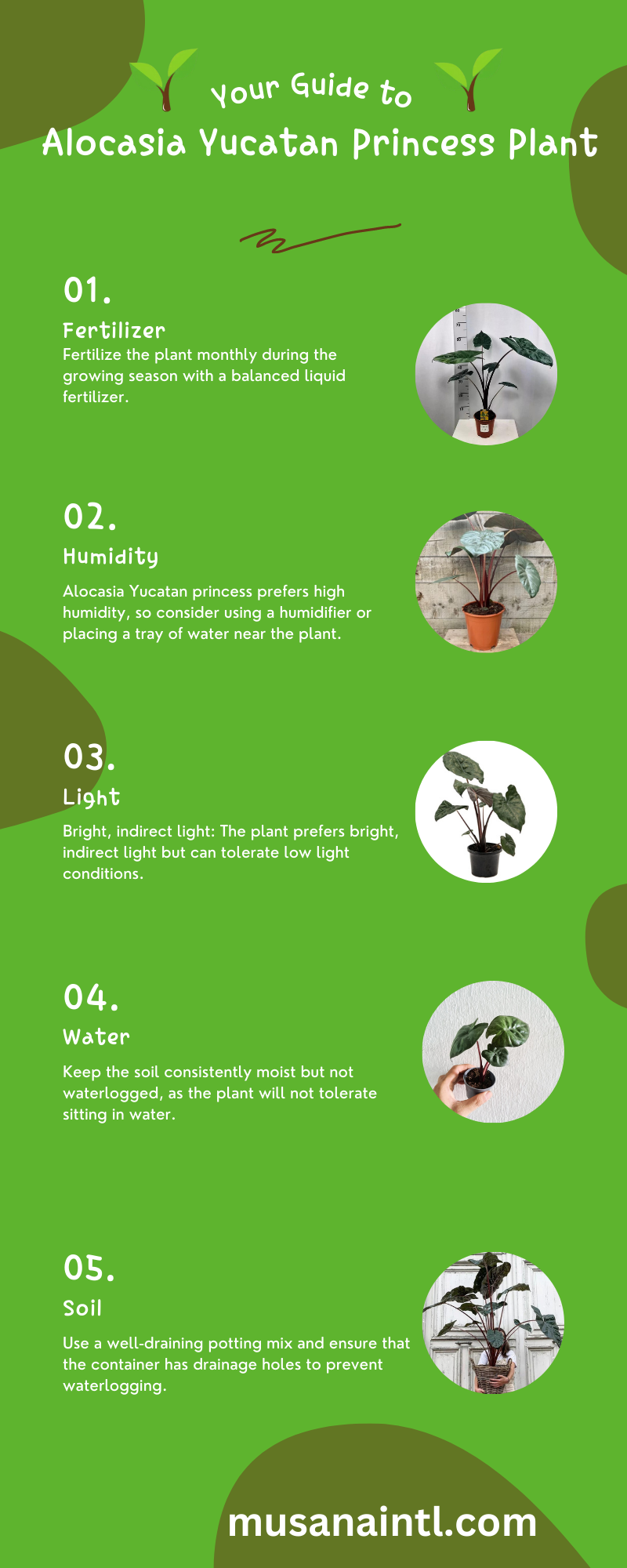
To help Alocasia Yucatan princess grow and stay healthy, it needs the following:
- Light: Bright, indirect light: The plant does best with bright, indirect light, but it can also survive in low light.
- Watering: Keep the soil consistently moist, but don’t let it get too wet, because the plant can’t stand to sit in water.
- High humidity: The Alocasia Yucatan princess likes high humidity. You could use a humidifier or put a tray of water next to the plant to achieve this.
- Temperature: This plant does best in warm temperatures between 60 and 90°F.
- Well-draining soil: Use a potting mix that drains well and make sure the pot has drainage holes to keep it from getting too wet.
- Fertilizer: Use a balanced liquid fertilizer to feed the plant once a month while it is growing.
- Pests and Diseases: Spider mites, mealybugs, and scale insects are common houseplant pests that you should watch out for.
It’s important to remember that Alocasia Yucatan Princess is poisonous if eaten, so keep it away from pets and kids.
What kind of care is required for the Alocasia Yucatan Princess?
If you give it the right care and attention, it’s easy to grow and will do well. This plant likes bright, warm light and a lot of moisture. Also, the plant likes soil that stays moist for a short time between waterings. If you want this plant to be happy inside, give it a warm place to live.
In this article, we will talk about how to care for and grow an Alocasia Yucatan princess. Read on to find out how to keep this lovely houseplant happy and healthy.
Light Requirements
Like all Alocasias, the Yucatan princess likes the bright light that comes from the side. So, put it somewhere with a lot of light where it can get enough light, but don’t put it in the direct sun because it will hurt its lush green leaves.
Even though this plant can handle morning sun for a few hours, too much direct sunlight, especially in the afternoon, can burn its leaves. The Yucatan Princess also doesn’t like low light because it can slow down its growth.
When a plant doesn’t get enough light, its stems get long and its leaves get small. But you can always use grow lights to give your plant the extra light it needs for healthy growth.
The plant does best in bright indoor spots near windows, but if you want to keep it outside, make sure to give it some shade and keep it away from the harsh afternoon sun, especially in the summer. If the leaves get too much sun, they can get hurt badly and change colour.
Fertilizer
This Alocasia Yucatan Princess needs fertilizer to grow and move forward because fertilizers have extra nutrients that help the leaves grow. It’s best to feed the plant once a month when its growing season, which is spring and summer. In winter, when the plant’s growth slows down, it doesn’t need to be fed.
A slow-release granular fertilizer or any liquid balanced fertilizer high in nitrogen is perfect for Alocasias to give them the nutrients they need to grow their leaves faster. You can also give your plant an organic fertilizer like fish emulsion, worm castings, or liquid dirt.
But make sure the plant doesn’t get too much food. Too much food can burn the roots, and not enough food can slow growth.
Spring and summer are the best times to compost, and you shouldn’t try to fertilize a plant in the winter when it stops growing and doesn’t need any extra nutrients.
Maintenance and Pruning
Since the Yucatan princess grows quickly, it needs to be cut back often. It’s easy to grow, but it needs care all the time to stay healthy and grow. This exotic plant has huge leaves that grow pretty big. If you want to keep the plant’s shape, you’ll need to cut off any old or damaged leaves.
As the Alocasia Yucatan Princess grows, the old leaves fall off to make room for the new ones. When you see old, yellow leaves on the plant, you should cut them off because they look bad and make the plant look bad.
When working with this plant, you should also use gloves and pruning shears that have been cleaned. Also, you can always put that cut stem in water and grow more plants from it, which you can then plant in a different pot.
Pruning can also help get rid of pests and diseases that are hurting a plant by cutting off the parts that are hurt.
How often do I need to give my Yucatan Princess water?
This beautiful houseplant likes soil that is always damp, but not soaked. It also likes to dry out a bit before being watered, so don’t water it until the top layer of soil is dry. Even so, in the summer, you have to water your plants more often because the warm weather makes the soil dry out more often. In the winter, it’s the other way around.
But you should be careful when watering because this hard-to-find plant is very sensitive to both too much and too little water. Too much water can cause serious fungal infections and root rot, while too little water can cause it to grow slowly. So, carefully figure out how much water the plant needs.
There are a few things you can do to tell if a plant needs water. The best way is to stick your finger in the soil. If it feels dry up to the knuckle, your plant needs water. Checking the weight of the pot is another thing you can do. If the pot feels lighter, it means your beloved green baby needs water. Use water that is both distilled and lukewarm to keep your plant healthy and keep it from getting shocked.
Bottom Watering
Bottom watering is a good way to keep your plant moist without risking overwatering it. It keeps your plants from getting too much water in their pots. This way, the potting mix will only take in as much water as it needs, instead of forcing your plant to take in more water than it needs. It also keeps some pests away, since the top layer of soil will stay dry when you water from the bottom.
Fill a bowl or water tub with water at room temperature, put the plant pot in the water, and let it sit for about 15 minutes. The drainage holes in the pot will let the soil soak up the water it needs. Please don’t let the plant sit in the water for hours, or the soil will get wet.
When you see signs of overwatering, like yellowing leaves and mold on the soil, cut back on how often you water. A moisture meter or moisture sensor is always a good way to check how dry the soil is.
Humidity and Temperature
The Alocasia Yucatan princess likes to live in very humid places. It grows quickly and healthily in places where the humidity is at least 50%. This plant does best in high-humidity rooms like the kitchen and bathroom. If the humidity levels drop below what’s needed, mist your plant to raise the humidity around it. Also, the following methods can be used to increase humidity;
- Put a humidifier in the area near the plant.
- It’s also a good idea to put it with other plants.
- Put a tray of pebbles next to the plant pot.
In the same way, the Yucatan Princess plant likes warm weather because it comes from Southeast Asia. at temperatures between 65 degrees and 72 degrees Fahrenheit.
The Yucatan Princess plant is very sensitive to cold and can’t live in a cold place, so don’t leave it outside in the winter. Also, don’t put it near air conditioners, heaters, or windows that are frosty when it’s cold. It is also very sensitive to sudden changes in temperature because they have a big effect on its growth.
More Trending Guide:
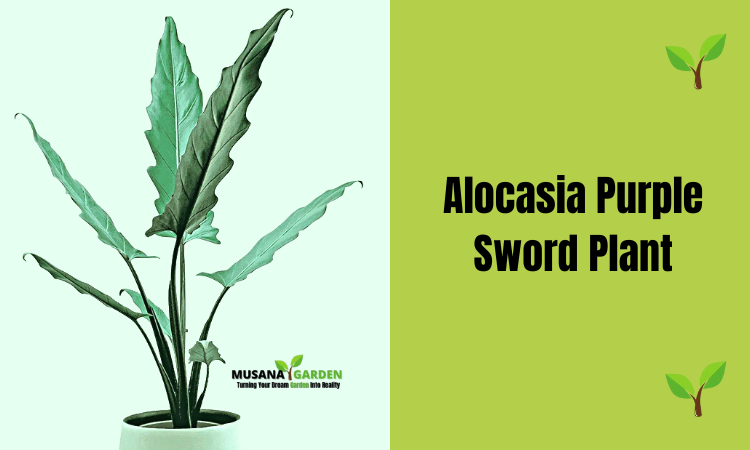
- Alocasia purple sword Care
- Alocasia wentii Care
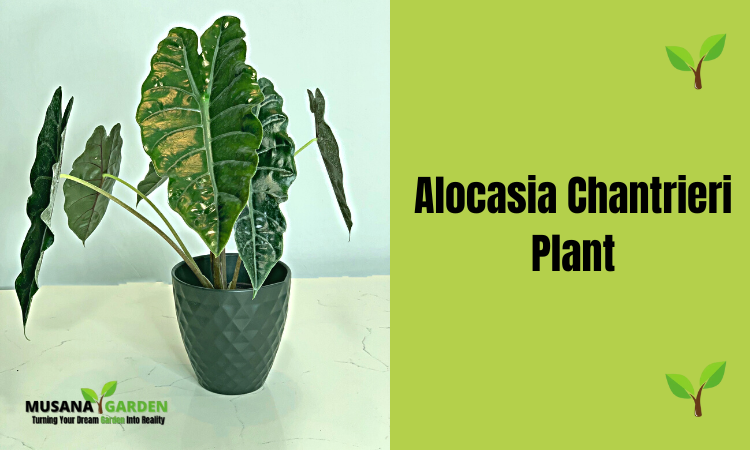
- Alocasia Chantrieri Guide
- Alocasia Frydek Variegated Care Guide
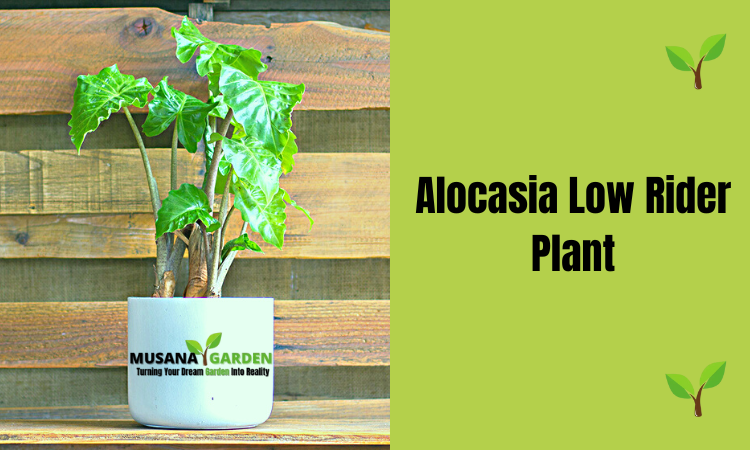
- Alocasia Low Rider Care
- Alocasia Dragon’s Breath Care
- Alocasia Dark Star Care
- Alocasia Jacklyn Guide
Soil Requirements:
Yucatan Princess grows well in potting mix that is loose, full of nutrients and drains well. To keep root rot and other diseases away from Yucatan Princess, plant it in soil that can both hold water and let it drain away. Also, the soil should have chunky parts so that the roots of the plant don’t sit in wet, dense soil.
The growing medium has a lot to do with how well your plant grows and stays healthy. We recommend using a potting mix with different-sized pieces to create air pockets that will help the soil breathe and drain. The following things can be mixed to make a potting mix for your Yucatan Princess.
- 25% Potting soil
- 25% peat moss or coco coir: This helps keep water and nutrients in the soil.
- 20% Perlite: Helps with drainage, insulation, and air circulation.
- 20% orchid bark: To make the soil chunky and give it air and water flow.
- 10% Horticultural Charcoal: This is used to keep the soil’s pH level stable.
Please don’t put your Alocasia Yucatan Princess in regular garden soil. The soil is too dense and holds too much water, which can suffocate the roots and cause root rot.
If you don’t want to go through all that trouble, you can also choose one of the potting mixes we recommend that are already on the market, such as:
- FoxFarm Ocean Forest Potting Soil
- WONDER SOIL Organic Potting Soil
- Organic Potting Soil
Growing in Semi Hydroponics
Alocasia Yucatan Princess, on the other hand, seems to like LECA clay balls and PON, especially when it’s young.
To move your plant into PON, gently tap the soil out of the root ball and then rinse the roots with water. Later, put PON in a glass jar or a planter that waters itself, and put the root ball in the PON jar. We suggest putting PON in a planter that waters itself because it reduces the chance of overwatering, which can cause root rot.
Repotting
Alocasia Yucatan likes to have its roots crowded together, but it needs to be repotted every year or two. If you do it right, repotting will help the plant grow. Roots that grow out of drainage holes are a clear sign that they are crowded. The best time to do this is during the plant’s active growing season when it can easily move to a new spot.
Step-by-step guide for repotting:
- Pick a pot that is at least 2 inches bigger than the one you are using now.
- Carefully pull the plant out of the pot it is in.
- Now, gently pull on the plant’s roots and look at them for any damage.
- At this point, look closely at the roots to see if there are any corms. Gently pull the corms off the roots. You can then plant them to make more plants.
- Please shake off the old dirt because it might not have enough nutrients.
- One-quarter of the new pot should be filled with fresh potting mix.
- Put the root ball of your plant in the new pot and cover the roots with a fresh mix of organic soil.
- Tap the ground gently and press down on the root ball to get rid of any air pockets.
- Lastly, water the plant and put it in a warm, humid place with indirect bright light so it can get used to its new environment.
How to Propagate Alocasia Yucatan Princess?
As with other Alocasias, Sarawakensis Yucatan Princess can be spread in different ways, but corm propagation and offset division work best. When your plant is growing, spring and summer is the best time to spread it.
Corms Method
Alocasias Yucatan Princess plants make corms in their roots that can be planted in separate pots to make new Alocasia plants. To get these corms, you might have to dig around your Alocasia plant’s potting soil and look at the roots and soil. Pull the corms off the roots with care.
These corms can grow roots in water, leca, sphagnum moss, or potting mix, among other things. For corms to root successfully, we recommend the shallow puddle method or a sphagnum moss container. Putting the corm containers on heating mats also helps the corms grow roots faster.
For the shallow puddle method, put the corms in a dish with a little water, but make sure they are not completely submerged. You can keep the dish for a couple of weeks if you cover it with a lid or plastic wrap. Once the corms have grown roots, you can plant each one in potting soil in its pot so it can grow on its own.
Offset Division
Yucatan Princess can grow “pups” that are genetically identical to the parent plant. These “pups” are connected to the parent plant by a stolon (like an umbilical cord). Healthy plants keep making new plants as they get older. This makes the plant bushier and helps it fill the pot.
- But these basal offshoots can be cut off from the mother plant and planted in separate pots to grow into new plants.
- Please press on the pot and gently pull the plant out of it. Brush any extra soil off the roots.
- Choose a pup with at least two leaves and some healthy roots (optional) to take away from the mother plant.
- Please put your fingers close to the roots of the nodes so you can hold on better.
- Carefully separate the pup from the mother plant by pushing the offset down until you hear a snap. You can also divide the offset by making a clean cut.
- Carefully pull the pup’s roots and leaves away from the mother plant ( if tangled).
- If the offset doesn’t already have roots, you can put it in a jar of water to grow roots first.
- Now, get two containers and fill them with new potting soil.
- Both the offset and the mother plant should be put in their pots.
- Put the Yucatan Princess plants that you just moved somewhere warm, humid, and with bright indirect light.
- After a couple of weeks, the plants will start to grow new leaves.
Toxicity
The Alocasia Yucatan princess plant is hazardous to both people and animals because it is very poisonous. Keep the plant away from kids and pets at all times so they don’t touch it or eat it.
If you eat it, it will irritate your skin, make your mouth and eyes swell, make you throw up, and make you feel sick. It can also cause more serious problems, like diarrhea and drooling. Your eyes may also hurt, be red, and get bigger.
And if the plant is eaten by accident, wipe the mouth out with a wet cloth and drink milk right away. Also, call the doctor right away. If your pet eats the plant, you need to get to the vet right away.
Pests, diseases, and other common issues
Spider mites often attack Alocasia Yucatan Princess because it is a fragile plant. Don’t let your plant stay in dry conditions for prolonged periods as it can cause spider mite infestation.
If you see tiny yellow spots and blotches on the leaves, leaf edges that are burned, and leaves falling off too soon, this is a sign of a spider mite invasion.
To treat the issue, use an alcohol and water solution by diluting one cup of alcohol and 30 oz water and spray the plant leaves with this mixture and wipe off with a paper towel later on.
You can also use neem oil solution to treat this issue as neem has disinfectant and antibacterial properties.
Diseases
The Alocasia Yucatan princess can also get sick, and root rot is one of the most common ones. It’s a serious and dangerous condition that can even kill your plant.
Root rot is most often caused by overwatering, potting mix that is too dense, and a pot that doesn’t drain well. When you give a plant more water than it needs and don’t let the top few inches of soil dry out, the roots start to rot.
Root rot is a serious problem that could kill the plant. Yellow leaves, black spots on the stems, and soft, black roots are signs of this disease. When you touch the roots, they are easy to break off.
If you notice these signs in your Yucatan Princess plant, uproot the plant from the pot and check the roots thoroughly. Also, cut off any damaged leaves and plant the Yucatan princess in a new pot with fresh potting soil.
Typical Problems
This Alocasia plant has also had some problems.
Overwatering
The biggest and most serious problem with Alocasia plants is that they get too much water. If you give this plant too much water, it can get some serious problems, like root rot. So, pay attention to how often you water your plant and only give it a drink when it needs it.
Underwatering
This is also a serious problem that can lead to leaves that are dry and crispy. Dryness can make plants grow slowly. Always pay attention to how much water a plant needs, and don’t let it go thirsty.
Scorching
If you put your plant in a spot where it gets direct sunlight for long periods, the leaves may get burned. The leaf burn can be fixed, so put your plant somewhere where it doesn’t get direct sunlight.
Curling up
If the plant doesn’t get enough humidity, its leaves will start to droop. Other signs of low humidity include curling leaves and brown edges and tips. If you have these signs, you should check the humidity.
Questions People Usually Ask:
How is a Yucatan Princess planted?
If you want your plant to grow well, put it in a place where it gets bright indirect light, the soil is moist but drains well, and the humidity is high.
Does it need a lot of light to grow?
Your Alocasia doesn’t need a lot of light, though. It needs a space with moderate light and indirect sun. It can also handle a few hours of direct light, especially in the morning, but it doesn’t like it for long.
Can the morning sun reach Alocasia?
Outdoor Alocasias do well in partial shade and a few hours of the morning sun, but only a few varieties with large, dark, thick leaves can handle full sun if they are prepared for it.
Is the plant Alocasia Yucatan Princess rare?
Alocasia Yucatan Princess is a plant that many people love, but it is not rare because it is grown a lot. The Alocasia Yucatan Princess is easy to grow and care for, so it will make a great addition to your collection of plants.
Last Words
The Alocasia Yucatan Princess is a beautiful houseplant with large, shiny, dark green leaves and a red stalk that stand out. This plant’s beauty and presence can brighten up any room.
It’s easy to take care of and does best in a tropical-like setting where it can get all the things it needs to grow. Give this beauty the care and attention it needs to stay happy and healthy.
It’s a must-have plant for people who like plants because it’s easy to care for and looks beautiful.
If you take care of the plant well, you can enjoy it for many years.
More Guide
- Philodendron dark lord vs majesty Comparison
- Philodendron Fuzzy Petiole Vs Nangaritense Guide
- Philodendron Melanochrysum Vs Micans Guide
- Philodendron Plowmanii Vs Mamei best comparison Guide
- Philodendron Pedatum Vs Florida Guide
- Philodendron Red Sun Vs Prince Of Orange
- Philodendron Orange Marmalade
- Philodendron Imperial Green
- Philodendron Paraiso Verde Guide
- Philodendron Golden Dragon Guide
- Philodendron Florida Green Guide
- Philodendron silver stripe Care
- philodendron Shangri La Care
- Philodendron Cream Splash Care
- Philodendron Florida Ghost Guide
- Philodendron snowdrift Care