
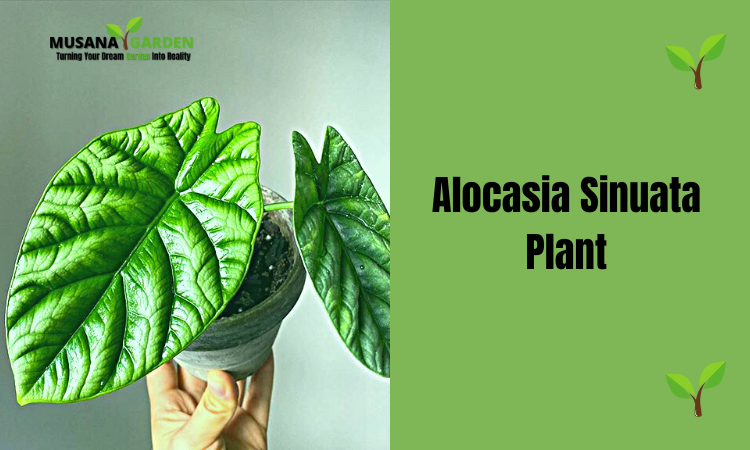
A species belonging to the genus Alocasia, Alocasia sinuata is also known by the common name Alocasia quilted dreams. Nicholas Edward Brown described this species in the year 1885.
Alocasia Sinuata (Quilted Dreams) Identifications

Alocasia sinuata is native to Philippines. Only the limestone woods of Samar, Leyte, and some portions of Mindanao in the Philippines are known to contain this plant, making it one of the least studied plants in botany.
It is a medium-sized, perennial herb with rhizomes that can grow up to 35 cm tall and has a thick stem.
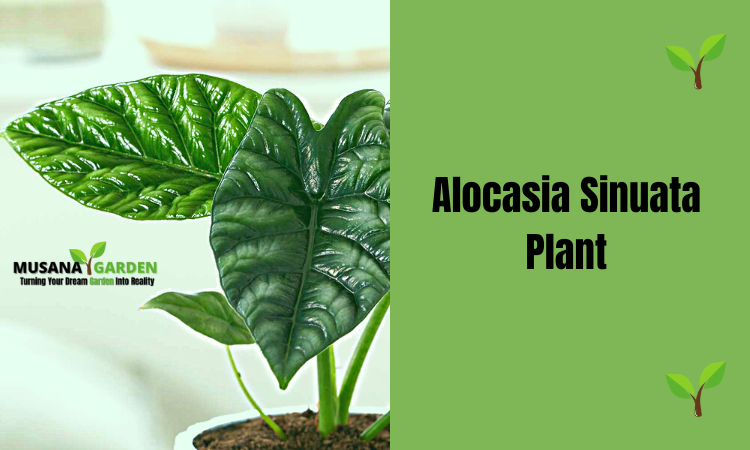
The leaves are 22–27 cm long, sagittate to ovato-sagittate, peltate or not, somewhat to strongly bullate, somewhat to thickly coriaceous, dark green (sometimes darker around the main stems) on the back, and lighter on the front. The margin is sometimes very shallowly sinuate, and the petiole is 19 cm long.
The plants start green and get darker, with a patina that looks almost like metal and dark green veins that are sunken in.
The flowers of the Alocasia quilted dreams grow at the end of a short stalk in the spring and summer. They are not very noticeable because they are often hidden behind the leaf petioles. The flowers are light yellow and don’t stand out much.
6 Tips On How to take care of an Alocasia Sinuata Plant
- Provide bright, indirect light. Avoid direct sunlight, as this can scorch the leaves.
- Keep the soil moist, but don’t let it get too wet. Before you water again, let the top inch of soil dry out.
- Keep the air around the plant moist by misting it often or putting a tray of water nearby.
- During the growing season, use a balanced liquid fertilizer to feed the plants every 4 to 6 weeks.
- Temperatures above 60 degrees Fahrenheit should be used to keep the plant warm.
Alocasia Sinuata is a tropical plant, so temperatures below 60 degrees Fahrenheit could kill it. - Keep an eye out for pests like mealybugs and spider mites, and if you see them, get rid of them right away.
Alocasia Sinuata - How to Take Care of Alocasia Quilted Dreams
You should only use cultural information as a guide and change it to fit your needs. You will need to think about your physical location, where you grow your plants, how much time you have to care for them, and many other things. Only then can you choose the best ways to care for your plants and yourself.
Lighting Needs
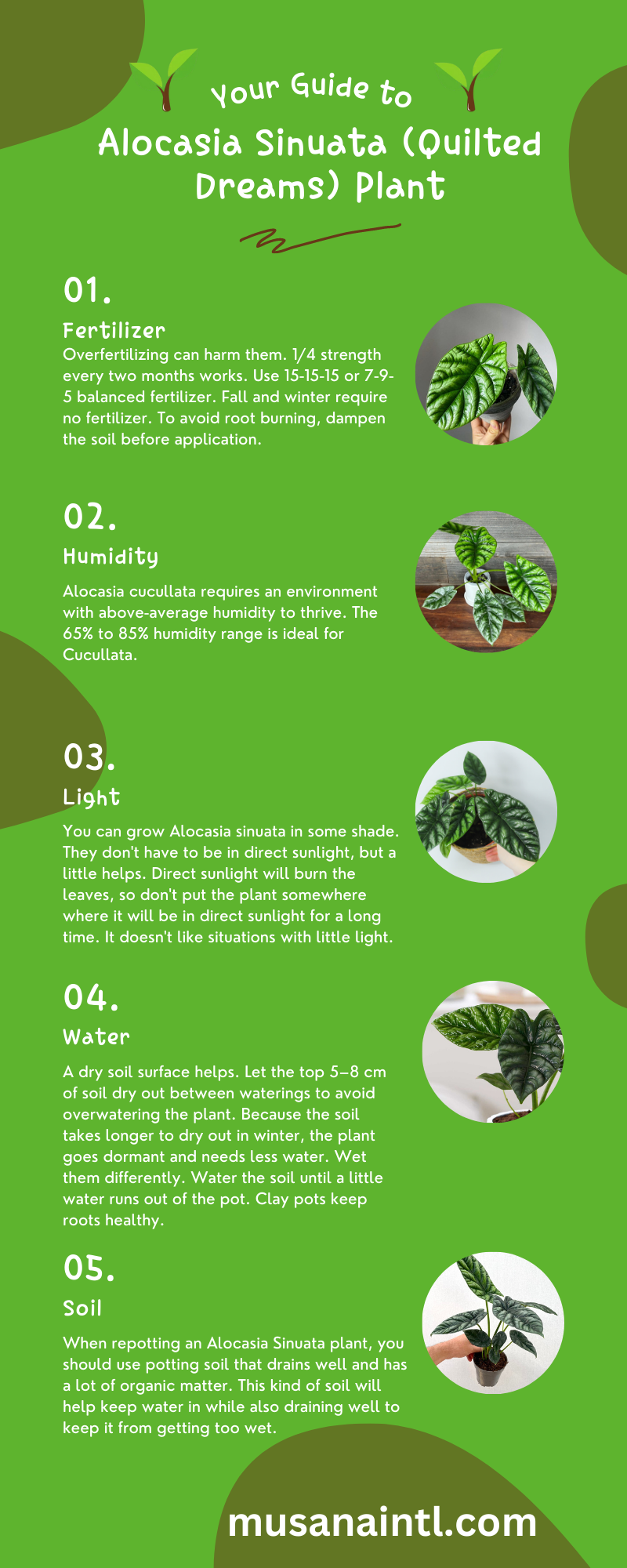
You can grow Alocasia sinuata in some shade. They don’t have to be in direct sunlight, but a little helps. Direct sunlight will burn the leaves, so don’t put the plant somewhere where it will be in direct sunlight for a long time. It doesn’t like situations with little light.
Rotate your plant every so often to make sure it grows evenly on all sides, and dust its leaves often so it can make the most of its photosynthesis. When you dust the leaves, you can also look at the undersides to see if there are any bugs.
Watering
It helps if the top of the soil is a little bit dry. Between waterings, let the top 5–8 cm of soil dry out so the plant isn’t sitting in too-wet soil. During the winter, the plant will go dormant and need less watering because the soil will take longer to dry out. Don’t keep them the same amount of wet. When you water, soak the soil so much that a little bit of water runs out of the bottom of the pot. A plant’s roots will stay healthy if it grows in a clay pot.
Fertilizer Requirements
Don’t use too much fertilizer, because it can hurt them. It’s enough to take 1/4 strength every two months. Use a well-balanced fertilizer, like a 15-15-15 or a 7-9-5. In the fall and winter, there is no need to use fertilizer. Make sure the soil is wet before you use it so you don’t burn the roots.
Pruning
During the growing season, the plants keep getting new leaves. To keep the plants looking neat, you can take off the older leaves that are dying off. Most of the time, damaged leaves mean that a plant has a fungal disease that needs to be treated right away.
During the winter
Alocasia quilted dreams can be grown as annuals, with new plants each year, or they can be kept over the winter (hardy only to zone 8). After the foliage has been killed by frost, bulbs can be dug up, dried, and stored.
Those without bulbs are harder to keep alive inside, but if you put them in a warm, bright place, you might be able to keep them alive as houseplants. Before it gets below 0 °C, it’s best to bring plants that will be kept inside. Cut off all but the top two leaves and keep them at room temperature in bright light.
When plants are half-dormant, keep them on the dry side and start watering and fertilizing them again when they start growing again in the spring.
Humidity:
Alocasia quilted dreams need a humidity level of 50% or higher; however, they will tolerate low levels with no harm. Mist the leaves regularly, place a humidifier nearby, or use a pebble tray to raise the humidity. If you do mist the plant, keep an eye out for fungal plant diseases caused by wet leaves.
Temperature
The plant grows best in warm temperatures. Maintain temperatures above 16 °C, but 19 °C is better as they are warm growers. They will falter when temperatures drop below 10 °C for prolonged periods. The best temperature range is 16-30 °C. Avoid cold drafts and sudden temperature changes.
Soil Mixture
When repotting an Alocasia Sinuata plant, you should use potting soil that drains well and has a lot of organic matter. This kind of soil will help keep water in while also draining well to keep it from getting too wet.
A mix of the following would make good soil for Alocasia Sinuata:
- Peat moss or coconut coir: These things help keep water in the soil and make it stronger overall.
- Perlite or vermiculite: These things help water drain and air get into the soil.
Compost or well-rotted manure: These give the plant the nutrients it needs to grow. - You can also improve drainage by putting a layer of gravel or other drainage material at the bottom of the pot.
Also, Alocasia Sinuata likes slightly acidic soil with a pH between 5.5 and 6.5, so it’s best to use slightly acidic soil or add a little bit of peat moss to the soil.
It’s important to make sure the bottom of the pot has drainage holes so that the plant doesn’t get too much water.
Substrate and growing media:
Alocasia sinuata need rich, moist soil and nearly all are perfect at the edge of a pond. The plant can be grown in a few inches of standing water and can be added to water gardens as emergent plants (the roots in water and with the soil just covered with water, but the plants not submerged).
When grown in a pot, the plant needs porous soil that has excellent drainage. An ideal soil mix would be equal parts of houseplant soil, peat moss, and perlite. These potting mix ingredients hold just enough moisture and provide excellent drainage. Repot once a plant has filled the pot. The pot size often appears quite small about the size of the plant this is because the plant grows best when root-bound in a small pot. Avoid rushing to move the plant to a larger container.
Watering:
A little dryness to the surface of the soil is helpful. Allow the top 5-8 cm to dry between watering to ensure the plant isn’t sitting in soil that is too wet. During the winter, the plant will go through a dormancy period and will require less frequent watering as the soil will take longer to dry. Do not keep them evenly moist. When watering, thoroughly saturate the soil until a little water runs out of the bottom of the pot. Growing in a clay pot will help maintain a healthy root system.
Fertilizer:
Fertilize sparingly they can be hurt by too much fertilizer. 1/4 strength every two months is adequate. Use a balanced fertilizer like a 15-15-15 or 7-9-5. No fertilizer is needed in the fall and winter months. Before applying, make sure the soil is damp to avoid burning the roots.
Propagation
They can be grown from seeds, but if you want a big plant, start with a big bulb or a plant with roots. The plants have thick roots called rhizomes that can be cut into pieces and used to grow new plants. The first leaves won’t come out of the bulb for a few weeks.
The best way to start these perennials that don’t like the cold is to put the bulb in a pot in March, put the top of the bulb close to the soil surface, and keep it in a warm place until the weather gets warmer, usually in late May or early June. As the plants grow, give them a lot of water and fertilizer, especially those in pots, which need a lot of food.
More Trending Guide:
- Alocasia purple sword Care
- Alocasia wentii Care
- Alocasia Chantrieri Guide
- Alocasia Frydek Variegated Care Guide
- Alocasia Low Rider Care
- Alocasia Dragon’s Breath Care
- Alocasia Dark Star Care
- Alocasia Jacklyn Guide
- Alocasia Yucatan princess Care
- Alocasia Pink Drago Guide
- Alocasia Cucullata Care
Alocasia Sinuata vs dragon scale
Both Alocasia Sinuata and Alocasia “Dragon Scale” are types of the elephant ear plant genus Alocasia. “Dragon Scale,” on the other hand, is a cultivar, which means that it is a specific type of Alocasia Sinuata that has been chosen for its unique qualities.
The leaves are the main difference between the two. The leaves of Alocasia Sinuata are big, shiny, and green, and the veins are easy to see. The leaves of Alocasia “Dragon Scale” are smaller, dark green, and have a unique scaly pattern that makes them look like dragon scales.
Both plants do best in a warm, humid place with bright, indirect light and well-drained soil. They also need the same care and upkeep and can be affected by the same problems and pests.
In short, Alocasia Sinuata and Alocasia “Dragon Scale” are both easy to care for and maintain, but the leaves of the two plants look different.
Alocasia Sinuata Variegated
Alocasia Sinuata Variegated also called “Frydek” or “Variegated Alocasia Sinuata” is a type of Alocasia plant. It is a tropical perennial that is known for its big, shiny green leaves with white or yellow spots. It comes from the tropical parts of Asia and does best in warm, damp places. For this plant to grow well, it needs bright, indirect light and soil that drains well. It likes to be kept moist all the time, but not soaked. It’s also a great plant to grow indoors and in pots.
Some problems that often happen with Alocasia Sinuata are:
Yellowing leaves
The lack of water or too much direct sunlight can cause leaves to turn yellow.
Solution
Make the air around the plant more humid and make sure it gets enough indirect light.
Leaves with brown tips
Solution
Use less fertilizer and make it more humid.
Wilting leaves
This can happen when there isn’t enough water.
Solution
Make sure the soil is always moist, but not so wet that it can’t be worked.
Pests
Mealybugs, spider mites, and scale insects are just some of the pests that can attack Alocasia Sinuata.
Solution
Check the plant often for signs of pests and treat if necessary with the right pesticide.
Slow growth
Slow growth can be caused by not getting enough light or food.
Solution
Make sure the plant gets enough light and feed it with a balanced fertilizer regularly.
To avoid these problems, you should always keep an eye on the plant’s health, make sure it gets enough light, water, and nutrients, and check for pests often.
Conclusion
In conclusion, the Alocasia Sinuata, which is also called the Elephant Ear Plant, is a beautiful and unique plant that would look great in any garden, indoors or out. Its big, shiny leaves and striking look make it the centre of attention in any room.
But it’s important to remember that this plant is dangerous for kids and pets and should be kept out of reach. For the plant to grow well, it needs proper care, such as the right amount of light, water, and food. The Alocasia Sinuata can be a beautiful and long-lasting part of any garden if it is taken care of properly.
More Guide
- Philodendron dark lord vs majesty Comparison
- Philodendron Fuzzy Petiole Vs Nangaritense Guide
- Philodendron Melanochrysum Vs Micans Guide
- Philodendron Plowmanii Vs Mamei best comparison Guide
- Philodendron Pedatum Vs Florida Guide
- Philodendron Red Sun Vs Prince Of Orange
- Philodendron Orange Marmalade
- Philodendron Imperial Green
- Philodendron Paraiso Verde Guide
- Philodendron Golden Dragon Guide
- Philodendron Florida Green Guide
- Philodendron silver stripe Care
- philodendron Shangri La Care
- Philodendron Cream Splash Care
- Philodendron Florida Ghost Guide
- Philodendron snowdrift Care