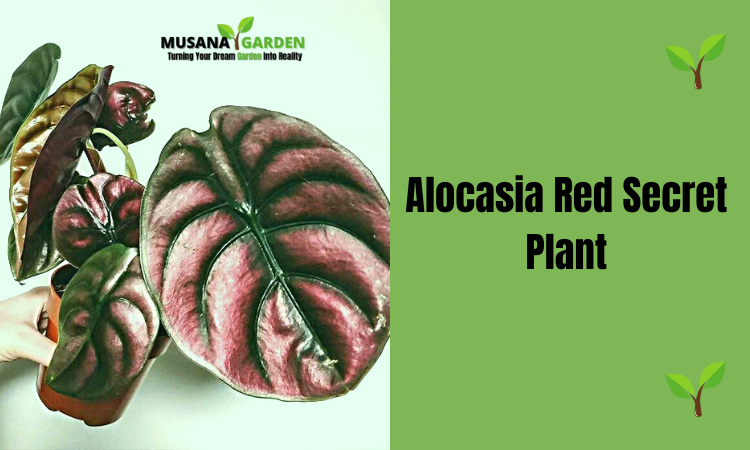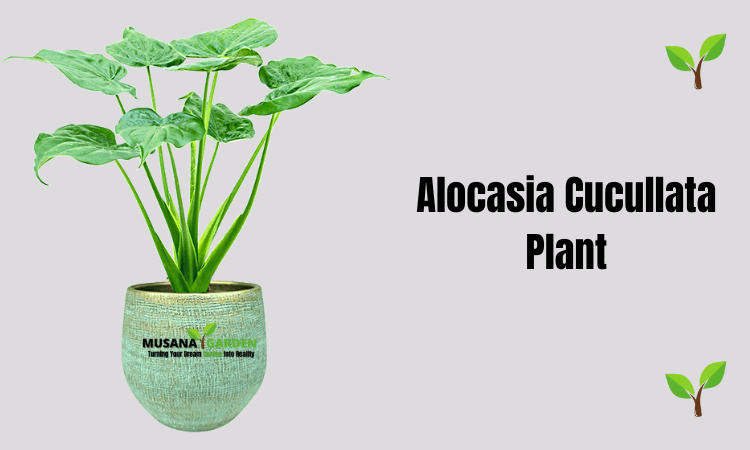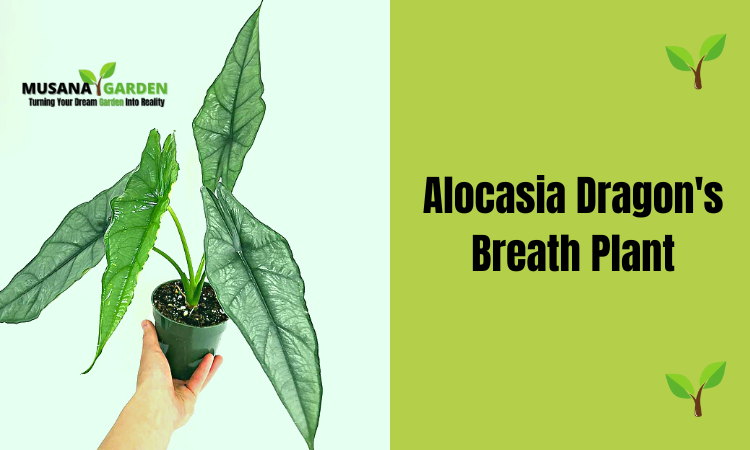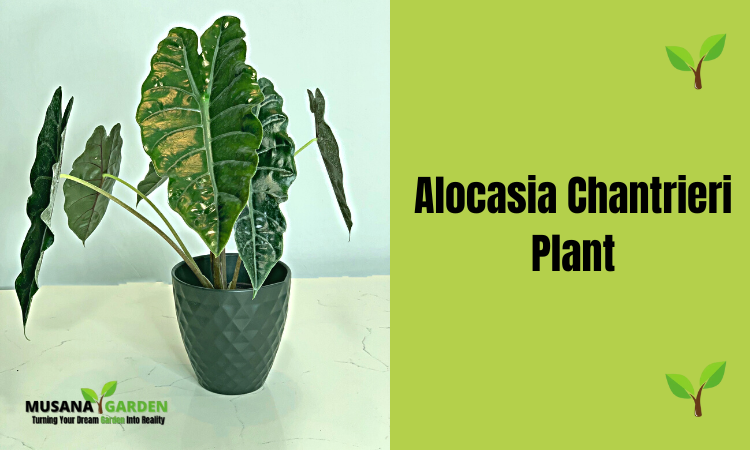

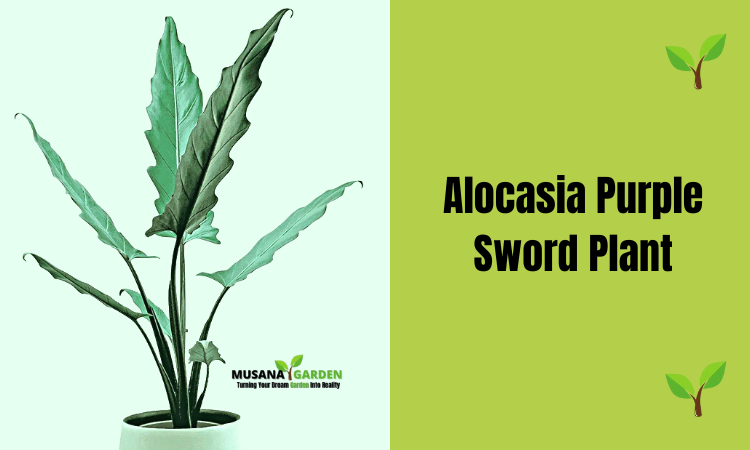
The Alocasia purple sword is an easy-care houseplant that is great for people who are always on the go. You can put it in your office to make it a little brighter, or you can put it on a flower shelf with your philodendrons and calatheas. Either way, it will look great!
Because their leaves are so big and pretty, alocasias are also called elephant ear plants. As soon as you see this beautiful Alocasia, you’ll want to get one for yourself.
This article will tell you everything you need to know about how to take care of your Alocasia as well as its history and beautiful appearance, so make sure to keep reading.
Here’s everything you need to know about the Alocasia purple sword, so let’s get started!
What is an Alocasia Purple Sword?
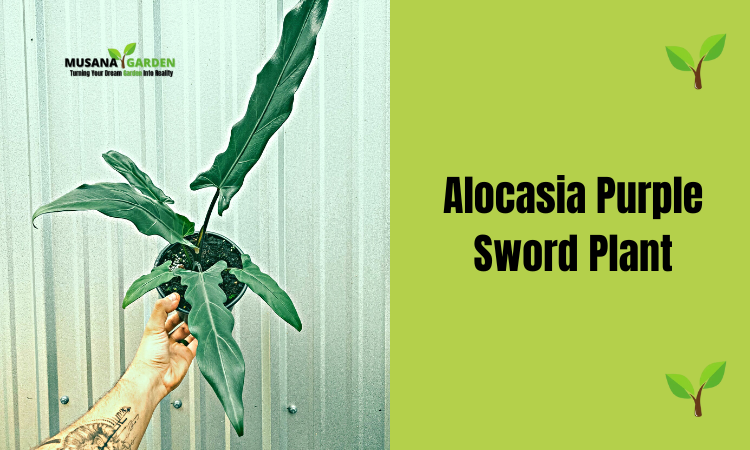
The Alocasia purple sword is an evergreen tropical plant that is highly valued for how pretty it looks. With its pretty green and purple colours, it can win over not only plant lovers but also people who want to decorate their homes beautifully.
Short Story About Alocasia Purple Sword Plant
There are many more interesting things to know about Alocasia purple swords, especially about where they come from and what problems they often have.
Let’s look at where they came from and how to take care of them.
History
The Alocasia purple sword belongs to the family Araceae, which came from Polynesia. Throughout history, this plan has been called many different things.
It was first known as a member of the Schizocasia genus. In 1898, a German botanist named Heinrich Gustav Adolf Engler was the first to describe and list it as a subtropical plant from Asia.
Then, in 1968, a botanist named Dan Henry Nicholson put it in the Xenophya genus. This was almost a hundred years after it was first found.
In 1990, an Australian botanist named Alistiar Hay gave this amazing plant a new name and gave it the description and classification we use today.
The Alocasia lauterbachiana was also called Alocasia wavriana, or so says Garden Chronicles 3.
Care for the Alocasia Purple Sword

Most alocasias are easy to take care of. They only need soil that drains well, water, and sunlight to be happy.
But if you want your alocasia plant to look as good as it can, you need to take care of it regularly. Use all of the tips and tricks in this care guide to getting the most out of your purple sword or jewel alocasia plant. Light and water alone won’t be enough.
Climate And Temperature
The Alocasia purple sword doesn’t like it when it’s cold. It likes it when it’s warm. The perfect temperature is between 65 and 75°F (18 and 23°C). Anything below 60°F (15°C) can cause leaves to drop and even kill plants.
Don’t let this happen by keeping the thermostat above 60°F (15°C).
This plant also likes humidity, so don’t put it near an air conditioner. Also, keep your Alocasia out of drafts and away from sudden temperature changes. When choosing a home for your purple sword, you should think about these things.
Water and Moisture
Since alocasias grow in the tropics, they like to be wet. But you should never let your Alocasia purple sword sit in water, as this can cause fungal infections like root rot.
When you can feel that the top soil is dry is the best time to water your Alocasia. When the top 2-3 inches (2.5-7.5cm) are dry, you should give your plant a good drink of water. Before putting the alocasia back in its home, you should let any extra water drain away.
It’s a good idea to water your Alocasia more often, but with less water. This will keep the soil moist without making it hard to work.
You should also pay attention to how you water during different times of the year. Spring and summer are when the Alocasia purple sword grows the most, so it needs more water then. During these months, the weather is hotter, so your plant will need more water to keep from drying out.
But in the fall and winter, when your alocasia goes to sleep, you should water it less. During the colder months, you don’t have to worry about the soil drying out, so you can even let it go dry between waterings.
It’s important not to give your Alocasia purple sword too much water, as this could kill it.
Humidity
Tropical plants like the Alocasia purple sword grow best in places with a lot of moisture in the air. About 70% humidity is best for this Alocasia. It can handle lower levels, but not anything less than 45-50%.
I’m sure that most homes aren’t as humid as this one, but there are ways to make them more so.
The pebble tray method is one of my favourite ways to raise the humidity in a room. Place some rocks (they don’t have to be pebbles) in a tray and pour water over them. The Alocasia is then put on the tray, and you’re done! As the water evaporates, it will make the air around your plant more humid, but not anywhere else in the house.
Misting your Alocasia purple sword is another way to do it, but it’s a bit risky. Misting isn’t the problem, but you should make sure the leaves don’t stay wet for too long because that can lead to diseases caused by fungi.
If you think all of this is too much trouble and don’t mind spending an extra dollar or two, you can always buy a good humidifier. So, your indoor plant won’t get sick from fungus, and you won’t have to worry about keeping the humidity level just right.
Soil And Fertilizer
The best way to take care of an Alocasia lauterbachiana is to make it feel like it is in a southeastern Asian rainforest. This is also true for what kind of substrate you should use.
Alocasias grow best in moist, well-drained soil with lots of nutrients and organic matter. You can buy a potting mix for aroids anywhere, or you can make your own.
You can start with your favourite soil mix and add perlite or coco coir. This will help with drainage and make it less likely that the roots will rot. But you also need to add things that keep the soil moist, and sphagnum moss (or peat moss) is great for this.
Moss stores water and gives it to the plant when it needs it.
Lastly, you will need to improve airflow to keep root rot from happening. You can use orchid bark, horticultural charcoal, or a mix of the two. Try things out because you can’t go wrong.
Check Out This Guide
- Alocasia Dark Star Care Guide
- Philodendron Fuzzy Petiole Guide
- Philodendron Jose Buono Care Guide
- Philodendron el choco red Guide
- philodendron summer glory Guide
- Philodendron Lickety Split Care
- Alocasia Jacklyn Care Guide
- Alocasia Dragon’s Breath Care
Fertilizer
Don’t forget to pick up a bag of water-soluble slow-release fertilizer when you’re checking out with your aroid potting mix.
Fertilize your Alocasia twice a month during its growing season, which is spring and summer. Stop giving the plant fertilizer when it goes into dormancy.
I wish I had known that you should water your plants before you feed them. If the soil is dry, the chemicals in the fertilizer can damage the roots by causing “fertilizer burn.”
Time for Repotting
Since the Alocasia purple sword grows quickly, you might need to move it to a bigger pot once a year. Check to see if your Alocasia needs to be repotted by seeing if the roots are sticking out of the pot.
The best time to move a plant to a new pot is when it is growing. This is done in the spring when the roots are still growing and have time to get used to their new pot before the plant goes to sleep for the winter.
When repotting a plant, experts say to separate its roots. This will speed up the plant’s growth, but it will also make it smaller.
Also, when you divide the roots for propagation, you can use some offset divisions. The Alocasia purple sword is so beautiful that I’m sure you’d like to have more of them. You could even give one to a friend.
Light
The Alocasia purple sword is a tropical plant, so it does best in conditions that are also tropical.
This means it needs a certain amount of light. Most of the time, tall trees protect these aroids from direct sunlight, and you should do the same in your home.
The purple sword likes bright, indirect light because it keeps its beautiful leaves from getting burned.
You shouldn’t put this Alocasia on the north side of your house, because it won’t get enough light and will start to lose its colour.
You can put your Alocasia plant a few feet away from a south or west-facing window, but an east-facing windowsill is the best place for it. You can be sure that your plant will get the right amount of sunlight this way.
To take the best care of your alocasia plant, you need to give it a lot of indirect sunlight.
Maintain Plant Hygiene
Clean the leaves of the plant often with a damp cloth to keep it healthy and growing. This is a good way to help the alocasia purple sword leaves absorb light better and keep dust off of them, too.
Toxicity
The plant has crystals of oxalate, which are poisonous if eaten. Keep the plant away from pets and kids, because if they eat it, it can make their stomachs hurt and swell up.
How To Propagate The Alocasia Purple Sword
Before you try to grow more Alocasia plants, you should know that they grow from rhizomes that are found under the ground. This means that you can use these offsets to spread them.
You can’t grow Alocasia purple swords from stem or leaf cuttings, but don’t worry! We have a lot of tips and tricks that always work for growing plants.
The 5 Stages of Propagation
First, you need to break up the soil around the roots. Then carefully take the plant out of its pot and brush off any extra soil.
Step 2: Find offsets. This is the second step. You will see that these new plants are coming out of the mother plant. Each of these seedlings will grow into a new plant on its own.
Step 3: Separate the offsets from the mother plant. Do this very carefully, and don’t pull or tug on the main plant too hard or you could hurt it badly.
Use a sharp knife or gardening shears to cut them off, and make sure to wear gloves and clean everything so you don’t spread bacteria that could kill both the baby plants and the mother plant.
Step 4: Plant the offsets in a separate pot. Fill the pot with fresh, well-drained, aerated soil that is full of organic matter. Also, change the soil of the mother plant and, if it needs it, find it a bigger pot.
Step 5: Finally, all you have to do is water the plants and put them in a place where they will get a lot of bright indirect light. Then you can enjoy your new plant family members!
The good thing about dividing offsets is that they already have roots, so it won’t be long before your plants are doing well.
And you never know, maybe they’ll make friends with your pothos plant or Alocasia black velvet.
Pruning And Cleaning
The Alocasia purple sword grows quickly and needs to be trimmed regularly to keep it in check. This means cutting back and cleaning.
If you don’t prune your alocasia plant, it can get really big and messy. It will look healthy and clean after you prune it.
There will also be dead or dying leaves, which you should cut off so they don’t ruin the look of your indoor plant.
You will also need to prune your Alocasia if you see any changes in the leaves, which can be a sign of disease. Cut off and throw away any leaves that look strange.
Cleaning
When it comes to plants with big leaves like the Alocasia purple sword, it is very important to clean them.
If needed, use a damp cloth to wipe away the dust, but be sure to dry the leaves afterwards. If you don’t want to wipe the water off the leaves, you can let the plant dry on its own. Just don’t spray or mist the plant to add more water.
Foliage And Flowers
The leaves of the Alocasia purple sword are by far the most interesting part of the plant. It doesn’t have the name “purple sword” for nothing.
The sharp, sword-like leaves are a dark green that is hard to resist and will get your attention. Its undersides and veins are maroon, almost dark purple, which makes it even more attractive.
Also, it will go well with the other alocasias you have, especially the Alocasia odora variegata, which has beautiful white stripes.
It might surprise you to learn that the Alocasia purple sword can make flowers, but it can. But compared to the beautiful leaves, these green and purple flowers aren’t that big of a deal.
If you take good care of this Alocasia, it can bloom all year long, which is an interesting fact.
Common Issues
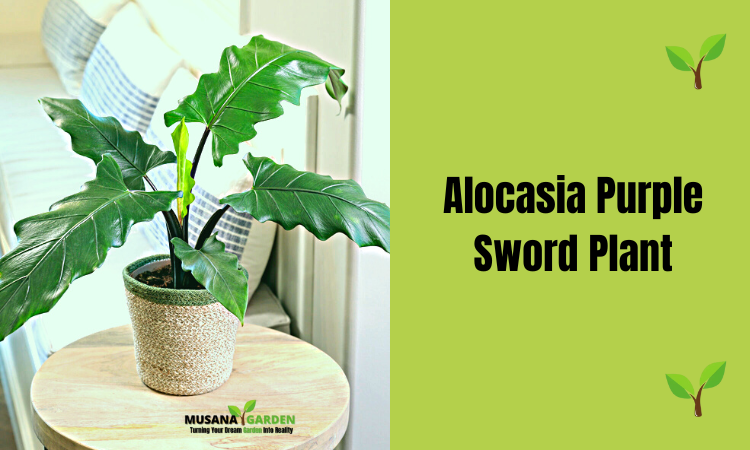
The Alocasia purple sword is not immune to sickness, and it does get sick from time to time. It will also be attacked by pests, but if you pay close enough attention, you should be able to stop them before it’s too late.
Pests
This Alocasia plant is often bothered by spider mites, mealy bugs, and aphids. But they are easy to get rid of with neem oil or rubbing alcohol. Alcohol can be too harsh, so you should only use it when you’re in a real jam.
You can also try soap solutions to get rid of these annoying things. The best way to get rid of pests, though, is to stop them from coming in the first place. You can do this by spraying insecticide on the leaves every so often.
This can also save you the trouble of wiping the dust off the leaves, so give it a try!
Diseases
The Alocasia purple sword is a fragile plant with roots that can rot.
If you catch root rot early, you might still be able to save the plant. Dark black or brown spots surrounded by yellow can be a sign of this fungal infection. If you see this, cut off the sick leaves right away.
You must also let the soil dry out (or better yet, change the old soil and repot the alocasia). Lastly, you need to get rid of any roots that look like they are rotting.
How to See Problems Right Away
To help your Alocasia purple sword, try to take care of these problems as soon as you notice them. You can do this by watching what colour its leaves are.
If the leaves of your Alocasia are starting to turn yellow, it could be a sign that you’ve been giving it too much water. If you water less, you might still be able to save all the leaves. If the leaves are turning yellow and it’s too late to save them, the best thing to do is to cut them off.
Your Alocasia has had too much water if the leaves are drooping and there are brown spots on them.
If your plant has almost stopped growing, is wilting, and has greyish-coloured leaves, it’s a sure sign that you’re not giving it enough water.
Lastly, brown spots on the leaves can be a sign that the sun has burned your plant. But these brown spots aren’t surrounded by yellow circles. This is how you can tell that the problem isn’t too much direct sunlight and not too much water.
Frequently Asked Question

In this last section, you’ll find answers to the most common questions people have about the Alocasia purple sword.
Is the Alocasia purple sword rare?
Some people say that the Alocasia purple sword is not as rare as they say it is. Even though it is only found in South East Asia (mostly Borneo), you can find many places online that sell this exotic plant.
And it’s quite affordable!
What makes a purple sword different from a sword plant?
The Purple sword is in the family Alocasia, and its scientific name is Alocasia lauterbachiana. It is in the family of Araceae.
The Sword plant, on the other hand, is in the genus Echinodorus and is called Echinodorus grisebachii or Echinodorus amazonicus by its scientific name (Amazon sword plant). It is a member of the Alismataceae family.
The Sword plant is native to the western hemisphere, while the Purple Sword can be found in Polynesia and New Guinea.
The sword plant is also an aquatic plant. This means that it can be used in ponds, aquariums, and other man-made places where water is present.
The Purple sword plant, on the other hand, is a tropical plant that can’t live in water.
What does Alocasia’s purple sword taste like?
The oxalate crystals in the leaves of the Alocasia purple sword give it a sour taste.
But these crystals are poisonous and can kill your pets. They can also make people vomit, have diarrhea, swell and itch their skin, and burn their mouths and airways.
Conclusion
After all that, we can say that the Alocasia purple sword is a jewel among houseplants and will look great with any plant in the Anthurium genus.
It is easy to take care of and almost always spreads successfully (and fast).
This plant would make a great addition to your indoor garden, I’m sure.
More Guide
- Philodendron dark lord vs majesty Comparison
- Philodendron Fuzzy Petiole Vs Nangaritense Guide
- Philodendron Melanochrysum Vs Micans Guide
- Philodendron Plowmanii Vs Mamei best comparison Guide
- Philodendron Pedatum Vs Florida Guide
- Philodendron Red Sun Vs Prince Of Orange
- Philodendron Orange Marmalade
- Philodendron Imperial Green
- Philodendron Paraiso Verde Guide
- Philodendron Golden Dragon Guide
- Philodendron Florida Green Guide
- Philodendron silver stripe Care
- philodendron Shangri La Care
- Philodendron Cream Splash Care
- Philodendron Florida Ghost Guide
- Philodendron snowdrift Care