
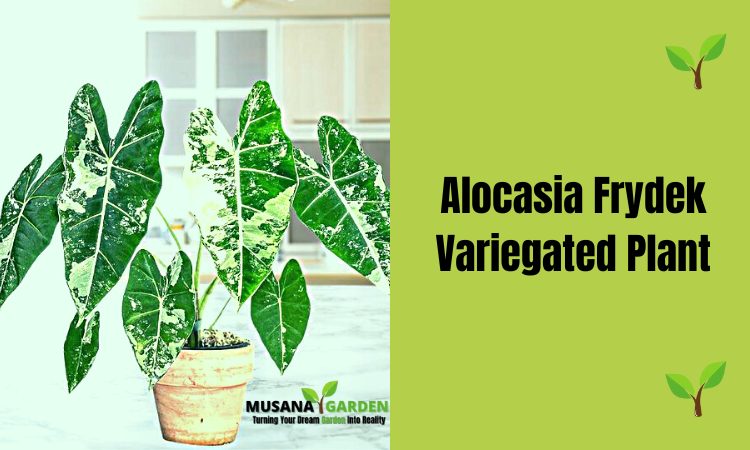
The Alocasia Frydek Variegated is a tropical plant that grows in tropical areas of Southeast Asia. Some people think it is the most beautiful of all the Alocasias because it is big and shows.
Some people like the way Alocasia Frydek Variegated looks because its vertical lines give any room a formal look. Some people would rather have the large “heart-shaped” green leaves on Frydek, which look just as beautiful and expensive. The plant has big, dark green leaves that are spotted with silver. This gives the plant’s leaves a metallic look.
In addition to its unique markings, this plant is a great way to bring tropical plants into your home and is great at spreading. But taking care of a Variegated Frydek isn’t easy, like most of the houseplants in our index, so keep reading for a full guide on how to care for your leafy friend.
To take care of an Alocasia Frydek Variegated, keep the following tips in mind:
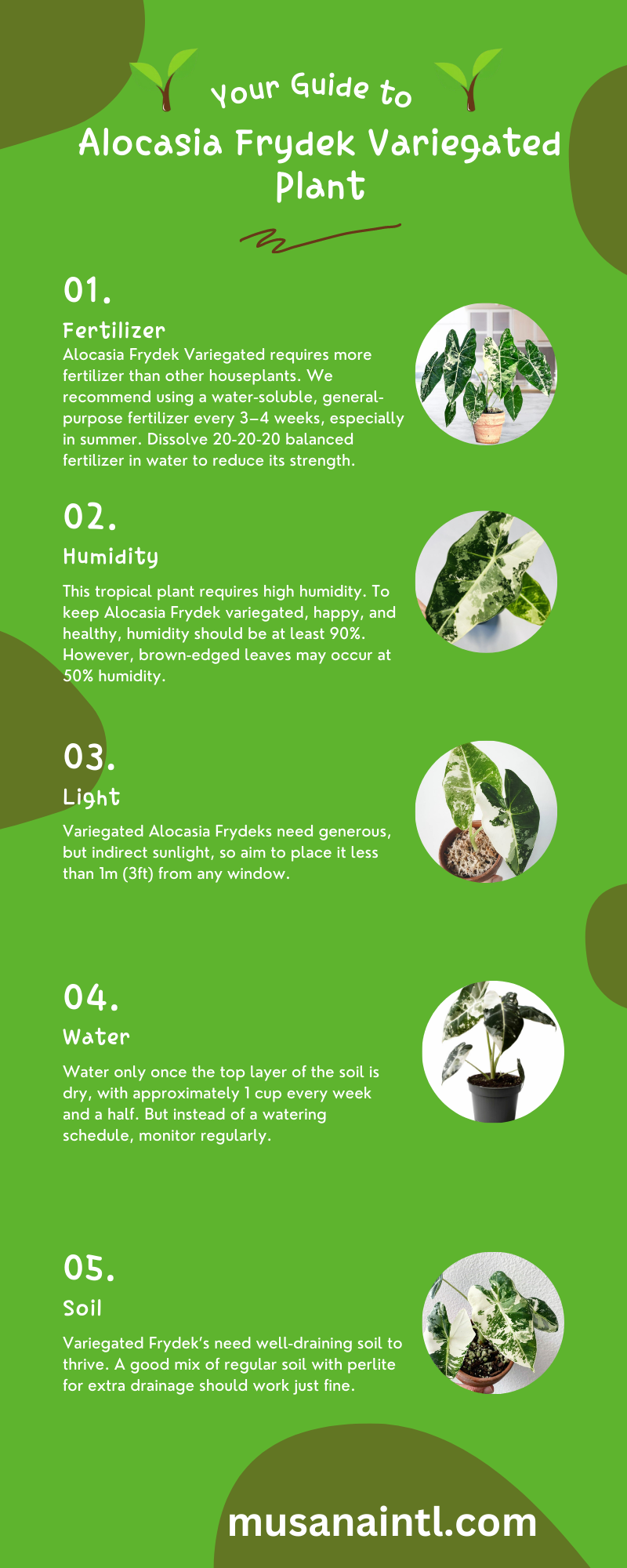
- Light: Variegated Alocasia Frydeks need lots of indirect sunlight, so put them less than 1m (3ft) from any window.
- Water: Only water when the top layer of the soil is dry, about once every two weeks. But instead of a watering schedule, check on them often.
- Soil: For Variegated Frydeks to do well, they need soil that drains well. Adding perlite to regular soil to help it drain better should work just fine.
But that’s the gist of it. If you want to go deeper, please read further down.
Environmental Conditions
Alocasia Frydek Variegated is a tropical plant that grows in Southeast Asia, where it likes the warm weather. This plant is a great way to give your home a tropical feel.
The Alocasia Frydek variegated is also called the Alocasia Micholitziana Frydek and the Frydek Elephant Ear, among other names. To clear up a common misunderstanding, Micholitziana is the species, and Alocasia Micholitziana ‘Frydek’ is a rare variegated cultivar of Alocasia Micholitziana.
But Alocasia Micholitziana ‘Maxkowskii,’ or Green Velvet Alocasia, is often sold as Alocasia Micholitziana ‘Frydek,’ which is the wrong cultivar name. We’ll call this plant Alocasia Frydek Variegated in this care guide.
Is the amount of variation in Alocasia Frydek stable?
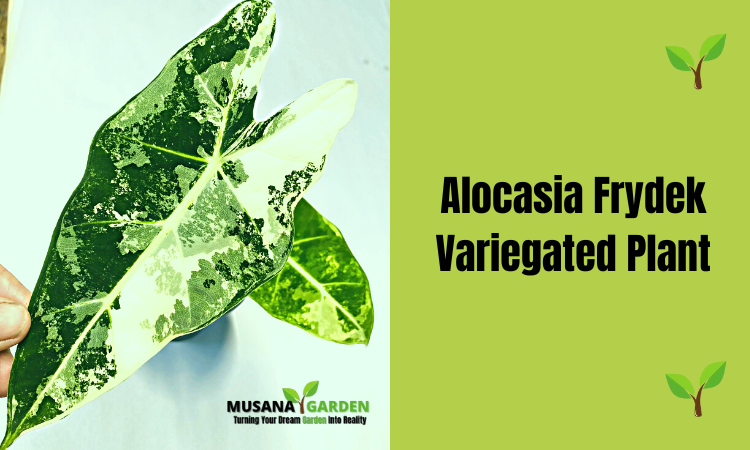
The Alocasia Frydek variegated has a very unstable pattern of variegation. One leaf will grow up to be all green, another will grow up to be all white, and another will be spotted, but this makes it the most beautiful and unique Alocasia in the Araceae family.
The main draw is the half-moon and full-moon-shaped leaves, which is why it is so popular. Some gardeners think it is the most beautiful and delicious variety of Alocasia. It gives an office, home, or garden a formal and dramatic look wherever it is put.
But the mother plant determines how stable the variation is. The apical meristem is a dome of cells that makes up the whole plant. The different colours on a leaf or the whole plant are just parts of this dome. So, as that dome spreads out and turns into a whole plant, some parts change colours while others stay green.
How do you care for an Alocasia Frydek variegated?
In the last few years, Alocasia Frydek variegated has become very popular, and for all the right reasons. Keeping it healthy and growing can be hard for some people, especially beginners, but if you take good care of it, this plant’s long, colourful leaves may surprise you. Alocasia Frydek is different and doesn’t need much care, but it does need to be watered often.
It needs a lot of bright, indirect light, high humidity, around 90%, and potting mix that drains well. The plant also likes to be warm, with a temperature of about 68 degrees Fahrenheit, and it needs to be watered regularly when the soil is almost completely dry. During the growing season, giving it fertilizer once a month is good for its growth.
This article will talk about everything there is to know about Alocasia Frydek’s varied. Let’s start with how to take care of this beautiful thing.
This beautiful Alocasia is known for being hard to grow, which may be why it costs so much. The good news is that it’s not as picky as people think it is and can grow well in places with lots of light and humidity.
Let’s look at all the care needs for Alocasia Micholitziana ‘Frydek’ Variegated in detail so you can grow it indoors and give your home a tropical feel.
Light Need
For growth and development, your beautiful Alocasia Frydek variegated needs a lot of bright, indirect light. This means that the plant needs light because the white parts of the leaves don’t have chlorophyll and can’t make food from light. So, giving your plant bright, indirect light for longer periods lets it photosynthesize and make the energy it needs to grow.
Keeping this in mind, put the plant where it will get enough indirect light in a bright spot. We suggest putting the plant in a spot that faces west or south and is a few feet away from a window so it can get plenty of light all the way through. If you live in a place where the morning sun is not as strong, the east-facing window can also work.
You can also give Alocasia Frydek Variegated grow lights to help it grow and keep its colour pattern. If the Frydek doesn’t get enough light, the leaves will turn completely green so they can make enough food for the plant.
The amount of light the Frydek Variegated gets has a big effect on its size and colour. You can also put your Frydek Variegated in an Ikea greenhouse cabinet where it will get a lot of light, making it happy and helping it grow big leaves.
What Light Does
If you want your plant to stay healthy and full of life, keep it away from strong direct light. If you don’t, the tips or edges of the leaves may turn brown. The white spots on the leaves are very sensitive to direct sunlight and can get burned in the afternoon if they get a lot of it. So, if you grow Alocasia Frydek Variegated outside, keep it in a place where it won’t get too much wind.
Also, not enough light is bad for the plant’s growth because it can slow it down and make it take a long time for your lovely plant to grow new leaves.
Also, if there isn’t enough light, the leaves may turn yellow if the soil stays wet for a long time and doesn’t dry out completely. This can cause the plant to get too much water and the roots to rot. Also, if Alocasia Frydek doesn’t get enough light, it can get leggy, with long stems that reach for light and small leaves.
Check Out This Guide
- Alocasia Dark Star Care Guide
- Philodendron Fuzzy Petiole Guide
- Philodendron Jose Buono Care Guide
- Philodendron el choco red Guide
- philodendron summer glory Guide
- Philodendron Lickety Split Care
- Alocasia Jacklyn Care Guide
- Alocasia Dragon’s Breath Care
How often should my Frydek Variegated be watered?
Alocasia Frydek variegated has thick stems that make it look like a succulent, but it can’t stand to be dry for long. So, keeping this plant happy is a bit of a challenge. Also, the roots of green velvet are very sensitive to water. To keep the soil from getting too wet or too dry, it’s best to give the plant a lot of light and water it just enough. I’ve noticed that, unlike other Alocasias, Frydek Variegated likes to dry out a bit between waterings.
During the growing season, the plant needs more water, but make sure to get rid of all the extra water because roots can’t grow well in wet soil. On the other hand, the Frydek doesn’t need as much water in the winter because it’s dormant and doesn’t grow new leaves. So, water it less often.
When should I water?
You can water your plant right if you follow a few steps. The sip or drip method of watering is a good way to keep the plant from getting too much or too little water. This mode lets you water the plant often and in small amounts so that it gets the right amount of water.
But before you water, check the soil by sticking your finger in it. If the top two inches feel dry, your plant is ready to drink. You can also find out how much water the plant needs by weighing the pot. If the pot feels lighter when you lift it, that means the plant needs water. Also, before you water your plant, you can use a moisture meter to check how dry the soil is.
Too much water can kill a plant because it can lead to diseases like root rot and other fungal infections. On the other hand, giving a plant too little water is also bad for it because it slows its growth and can cause it to go dormant.
Use a pot that is the right size so you don’t overwater. The pot should also have holes in it to let the excess water drain out. A potting mix is also a key part of solving this problem. Make sure to use a well-draining and airy potting mix so that the roots don’t get stuck in a wet, dense substrate.
Size and Growth
The Alocasia Frydek variegated is a beautiful houseplant that can reach a height of two to three feet in the best conditions. The leaves, which look like arrows and grow from a rhizome or tuber, are the main attraction. They can grow up to 18 inches (45 cm) long, which is why they are called Elephant ears.
When it’s warm, humid, and has a lot of light, the Alocasia Micholitziana ‘Frydek’ Variegated tends to grow new leaves every few weeks. However, like other Alocsias, it usually loses its old leaves to make room for new growth.
Variegated Frydek can have four or five leaves at once on its main tuber, or Rhizome. As they grow, Frydek sends out more offsets and pups, which makes the plant bushier and eventually fills the pot. Alocasia Frydek variegated can also be grown outside as a tender perennial in sheltered spots where it can get morning or evening sun.
Flowering
Alocasia Frydek Vaiegated has white and green spathe and spadix that grow from the centre of the plant occasionally, but they aren’t as noticeable as the plant’s beautiful leaves. But you can get seeds from these flowers by pollinating them.
Soil Need
For the Alocasia Frydek Variegated plant to grow, it needs moist soil that drains well and is full of nutrients. Root rot can be stopped for sure if your plant is in a chunky, airy potting mix. Soil that is too heavy or dense can hold too much water, which can cause roots to rot.
Perlite, pumice, and bark are all chunky materials that help the roots drain and get air. Even though Frydek Variegated likes to stay in a moist medium, the roots don’t want to be suffocated by soil that is too wet and heavy.
Since Alocasia Frydek grows in the rainforest, where the soil is full of humus, they eat a lot. They do best in organically rich soil because they need more nutrients than many other houseplants. The nutrients help the plant grow big leaves, and the drainage stops root rot and other diseases caused by fungi.
We suggest potting soil that has been changed by adding some inorganic materials to keep the soil light and airy.
How to Make Potting Mix
I usually mix the following things to make an organic-rich, chunky potting mix for my Alocasia Frydek Variegated:
- 20% Potting mix for indoor plants
- 25% Perlite: Perlite helps roots grow faster and improves drainage and air circulation.
- 25% pine or orchid bark: This makes the soil lumpy and makes air pockets that help the plant’s roots and drainage holes drain water.
- 10% Compost or worm poop. This gives the potting mix more nutrients.
- 10% Activated Charcoal: This makes the soil mix chunky, which gives the soil air and keeps the pH in balance.
The main parts of potting mix are the ones listed above. If you want to add a little more, you can also add the following.
- Pumice: Pumice makes the structure of the soil better. It makes the soil drain better and keeps it from getting too wet. Also, pumice keeps the soil from getting too hard.
- Coco peat: You can use a little coco peat. It helps keep water and nutrients in the soil and makes it less likely that root diseases and soil fungi will grow.
- Vermiculite is a mineral that does a great job of keeping water in. Sprinkle a small amount into the soil.
- Sand: It helps the soil drain better and get more air.
But if you don’t want to bother and would rather buy potting mix already made, we highly recommend the following:
- FoxFarm Ocean Forest Potting Soil
- WONDER SOIL Organic Potting Soil
Growing In Semi-Hydroponics
You can grow Alocasia Frydek Variegated in a soilless medium like LECA or PON, as this plant seems to like it.
The roots of Alocasia Frydek grow quickly and can breathe because PON and LECA medium have air pockets in them. At first, your Frydek plant may be a little stressed, but if you are patient, it will push back.
Using semi-hydroponics to grow alocasia frydek variegated
I have this in a substrate similar to Lechuza PON in a self-watering setup with Dyna grow foliage pro for nutrients! It has been growing very quickly and is easy for me to take care of. For LECA medium,
I think you should use a clear glass vase or jar to watch the roots grow and catch any root rot early. Also, please don’t use a very large or deep vase or jar because it won’t let the LECA dry out and you don’t want the roots of your plant to stay wet all the time.
Instructions on how to grow Alocasia Frydek in LECA or PON
Carefully pull your plant out of its pot.
- Shake the potting soil off the root ball and wash the roots well to get rid of all of it.
- Check the roots for any broken ones and cut them off with scissors that have been cleaned.
- To stop root rot, put your plant on a paper towel and spray the roots with hydrogen peroxide. You can also spray Superthrive Liquid Fertilizer Supplement on the roots to help them grow.
- Wait 30 to 40 minutes for the roots to dry.
First, fill half of a clean glass jar with LECA clay balls or a PON-filled self-watering pot. - Now, put the root ball of Frydek on the LECA or PON, and cover the roots with the rest of the LECA or PON.
- Then, pour the water into the LECA-filled plant jar and fill it 1/4 of the way.
Give your plant bright but indirect light and a lot of moisture. - Every 7 to 10 days, change the water and give your plant nutrient solution.
- If you are using hydroponics to grow an Alocasia Frydek, use filtered water or rainwater for the best results.
Overwatering and underwatering your Alocasia Frydek Variegated tips

We recommend that you take these steps to keep your Frydek from getting too much or too little water, which can be very bad for it.
If the pot is the right size for your plant, you won’t have to water it too much. It also makes sure that the soil drains well so that too much water doesn’t get into the roots and causes rot, which could kill the plant at any time.
To make sure this doesn’t happen, I recommend using a pot that is the right size—one that is big enough to hold all of the plant’s roots but not so wide or tall that water stays on top after you water it. Plants need space to grow without being constantly wet.
For your Variegated Frydek to do well, you need to give it a potting mix. In this case, you should use one that drains well and has the right ratios, such as 60% peat moss, 30% perlite, and 10% sand.
There are a few simple things you can do to give your plant the care it needs. Before you water again, check the soil moisture and the weight of the plant in its pot to see if it needs water. Don’t water on a schedule or when nature tells you to; water only when the plant needs it.
How to Propagate Alocasia Frydek Variegated?
The easiest way to propagate more Alocasia Frydek Variegated plants is to cut apart larger ones. We suggest doing this in the spring or early summer when the plant is growing well.
But keep in mind that most Variegated Frydeks are delicate plants that won’t do well if you try to propagate them at the wrong time. In light of this, you should only try to propagate large, healthy plants that can handle this process.
Method of Propagation
Just follow these steps to propagate your Alocasia Frydek Variegated:
- Remove your Alocasia carefully from its pot. To do this, squeeze the pot until the soil and plant are loose, and then slide them out.
- Take away any extra dirt from the roots.
- Try to find rhizomes that have stems growing from them. This will make it easier for you to spread the plant.
- Separate the rhizomes, and then use a sharp tool to cut the plant apart.
- Plant each piece of your Alocasia Frydek Variegated that you cut off into a moist potting mix and give it enough light.
So, that’s all! That’s how you propagate an Alocasia Frydek Variegated.
Diseases
Most of the diseases that affect Alocasia Frydek Variegated are caused by too much or too little water.
The easiest way to avoid water-related problems like bacterial leaf spots and root rot is to follow these three steps: pot choice, soil consistency (or lack thereof), and watering practices. If you don’t know what they are, go to the sections above about soil, water, and the pot.
Pests of the Alocasia Frydek Variegated
Mealybugs, spider mites, scale, thrips, and aphids, which feed on sap, are the main problem with these beautiful plants. As with many other Alocasias, these annoying pests seem to like Alocasias more than other normal houseplants.
With this in mind, all you need to remember is that pests are always a risk when you bring new plants into your home, so take precautions to keep them from coming along for the ride.
We suggest keeping your Alocasia outside for a week and making sure there are no signs that it was infested before bringing it inside with other plants. This will make sure that the pests won’t come back.
Finding pests early is the key to stopping an infestation. Check the top and bottom of your plant’s leaves for signs that something might be wrong, like tiny yellow dots that mean there are a lot of aphids in one place (you can usually see their trails by looking closely). It’s easier to help if you treat things early instead of waiting until they get worse.
Toxicity
If you eat a plant called Alocasia Frydek, it can be a bit dangerous. The calcium oxalate crystals in this species’ tissue can cause localized irritation and pain in humans, but the tissue itself is not dangerous unless you eat more than a cup of it at once, which is very unlikely.
But if you or someone you care about isn’t careful, its tissue can cause irritation, pain, and swelling in the mouth or intestines if it is eaten. Keeping this in mind, keep your Variegated Frydek away from young children and pets.
Common Problems and Frequently Asked Questions
How do you take care of Alocasia Frydek Variegated?
The fact that your Alocasia Frydek is “variegated” Variegated means that its leaves are more than one colour. Considering this, there isn’t much you can do to make these plants keep their colours. As a general rule, try to meet the basic needs of your plant (light, soil, and water) and make the environment as close as possible to what it would be in the wild. This should usually be enough.
Why is my Alocasia Frydek Variegated Drooping?
When the leaves of an Alocasia Frydek Variegated plant hang down, it could be a sign of many things, but it’s usually a sign of stress or bad care. Most of the time, plants die from too much or too little water, which can cause root rot. Other less common causes include changes in temperature, pests and diseases, changes in the environment, or repotting stress.
No matter what the problem is, the most important thing to do is figure out what might be causing it and try different things by changing its environment until you find the root cause.
Why are the leaves on my Alocasia Frydek Variegated going yellow?
Yellow leaves on an Alocasia Frydek Variegated are often a clear sign that the plant is getting too much water, but they can also be caused by too much sun. If the leaves at the bottom of your plant are yellow, it might be because it needs more water. If the leaves are light and pale, spread out in different places, and have brown, crispy edges and leaves, this could be caused by too much sunlight. So make sure to first figure out what the problem is and then deal with it in the right way.
Temperature stress (rapid temperature changes) or too much of a certain nutrient is another, less common reason why leaves turn yellow (excessive fertilizer use). If you see that your plant has more dead leaves than new ones, it’s trying to tell you that it’s not doing well, so try to change things right away.
More Guide
- Philodendron dark lord vs majesty Comparison
- Philodendron Fuzzy Petiole Vs Nangaritense Guide
- Philodendron Melanochrysum Vs Micans Guide
- Philodendron Plowmanii Vs Mamei best comparison Guide
- Philodendron Pedatum Vs Florida Guide
- Philodendron Red Sun Vs Prince Of Orange
- Philodendron Orange Marmalade
- Philodendron Imperial Green
- Philodendron Paraiso Verde Guide
- Philodendron Golden Dragon Guide
- Philodendron Florida Green Guide
- Philodendron silver stripe Care
- philodendron Shangri La Care
- Philodendron Cream Splash Care
- Philodendron Florida Ghost Guide
- Philodendron snowdrift Care
- Philodendron Domesticum Care
- snow white waffle plant Care
- Alocasia Jacklyn Caring Guide