
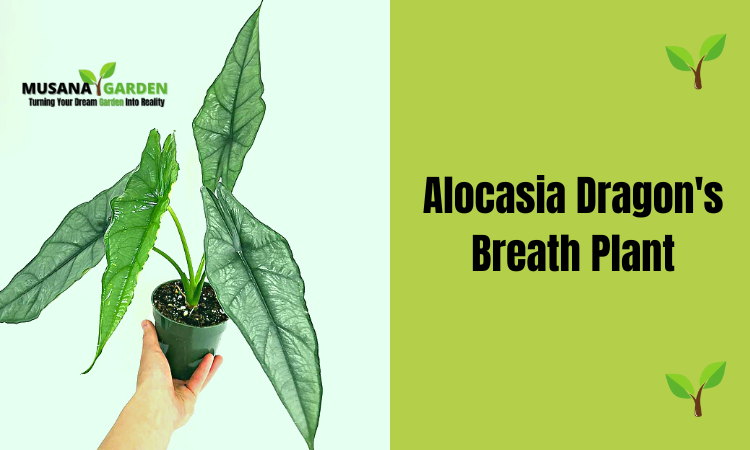
Alocasia Dragon’s Breath is a very beautiful plant. Some words that describe its beauty are long, thin, and pretty. There aren’t many indoor plants that can compare to its stunning beauty.
The drooping, silvery leaves of this rare Elephant Ear are like cupid’s arrows. They will make you love this plant forever. These beautiful indoor plants like higher than average humidity and bright indirect sunlight. Make sure to keep it away from the direct sun, or the leaves may get burned. Find out how to take good care of your Alocasia Dragon’s Breath!
Alocasia Dragon’s Breath Caring Tips
Alocasia Dragon’s Breath is a beautiful and exotic plant that can look great in your home or garden. But like any other plant, it needs care and attention to stay healthy and look good.
Your Alocasia Dragon’s Breath needs fertilizer, pruning, and the right amount of water to stay healthy and full of life all year long. In this article, we’ll talk about how much fertilizer an Alocasia Dragon’s Breath needs and when it should be pruned for the best growth.
We will also tell you how often you should fertilize your Alocasia Dragon’s Breath so that it stays healthy and beautiful for many years.
Light Requirements
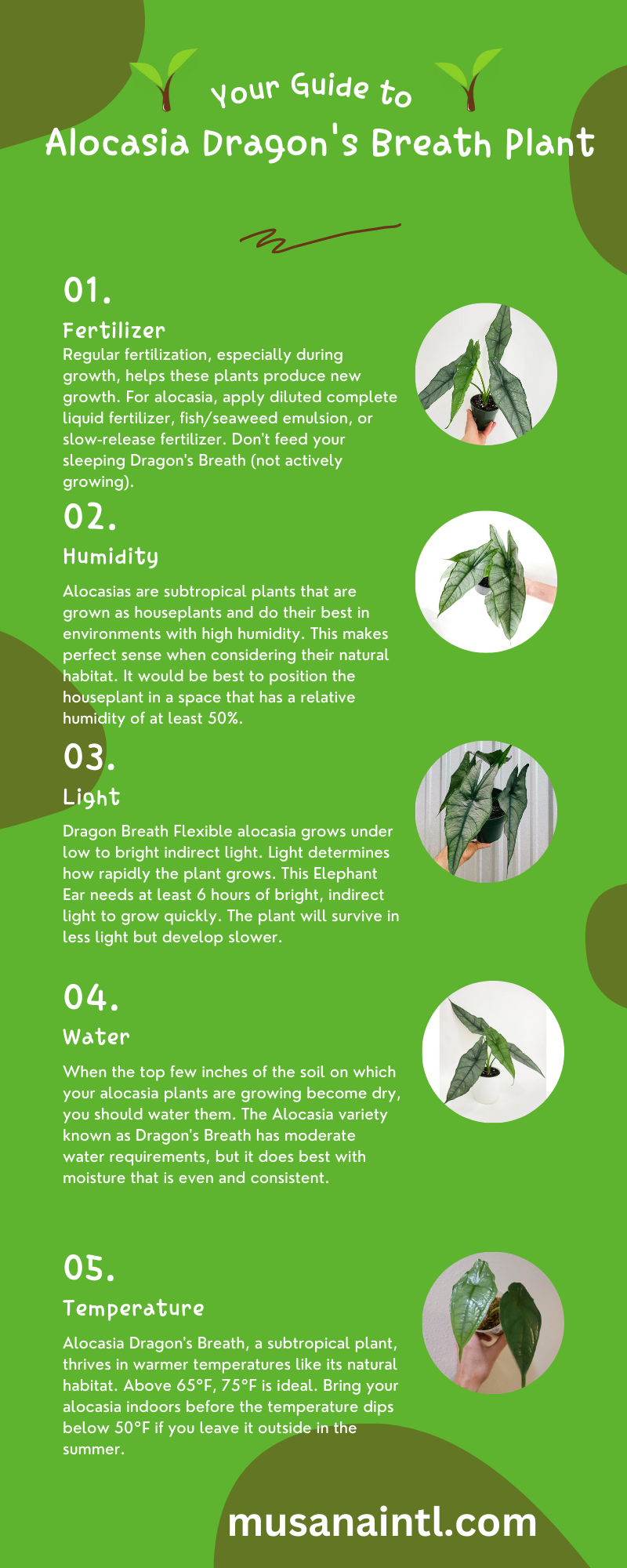
Dragon’s Breath Alocasia is flexible and can grow in low to bright indirect light. How fast the plant grows will depend on how much light it gets. If you want this Elephant Ear to grow faster, make sure it is in a place where it can get at least 6 hours a day of bright, indirect light. If you put the plant in a place with less light, it will still live, but it won’t grow as quickly.
Place your alocasia in a spot that gets some shade if you bring it outside during the warmer months. If the leaves are in direct sunlight, they will get burned.
Check Out This Guide
- Alocasia Dark Star Care Guide
- Philodendron Fuzzy Petiole Guide
- Philodendron Jose Buono Care Guide
- Philodendron el choco red Guide
- philodendron summer glory Guide
- Philodendron Lickety Split Care
- Alocasia Jacklyn Care Guide
Watering Needs
When the top few inches of the soil on which your alocasia plants are growing become dry, you should water them. The Alocasia variety known as Dragon’s Breath has moderate water requirements, but it does best with moisture that is even and consistent.
In general, alocasias enjoy having some of their soil dry out between waterings; however, you should never let them get completely dry for more than a day or two! During the winter months, you should water your plant less frequently if it is not actively developing or if it receives less than four hours of light every day.
Temperature Requirements
As a subtropical plant, Alocasia Dragon’s Breath does better in warmer temperatures, which are more like those in its natural habitat. The best room temperature would be 75°F, but anything above 65°F is fine. If you put your alocasia on a patio or outside during the warmer months, make sure to bring it back inside well before the temperature drops below 50°F.
Don’t put the plant near an outside door, a window with a draft, or in front of an air conditioning or heating vent, as these can cause the temperature to change and slow the plant’s growth or even hurt the leaves.
Humidity Requirements
Alocasias are subtropical plants that are grown as houseplants and do their best in environments with high humidity. This makes perfect sense when considering their natural habitat. It would be best to position the houseplant in a space that has a relative humidity of at least 50%.
Consider utilizing a humidifier or a pebble tray filled with water if you live in a climate that is drier than average or if you simply do not have access to an area that has sufficient humidity.
These plants require an additional boost in the amount of moisture they receive, which can be provided by either of these two methods. Find out more about how to make your houseplants more comfortable with increased humidity!
Fertilizer Needs
Fertilizing these plants regularly, especially when they are growing, can help them send out new growth. For alocasia, you can use a diluted complete liquid fertilizer, a fish/seaweed emulsion, or a slow-release fertilizer. Don’t feed your Dragon’s Breath when it’s sleeping (not actively growing).
Rate of Growth
These houseplants have a moderate growth rate, reaching their maximum height of about 3 feet inside while maintaining a width of the same proportion.
Are Alocasia Dragon’s Breath Toxics To Pet?
Yes, These indoor plants are toxic to pets and shouldn’t allow pets to come close to or in contact with the sap.
Quick Alocasia Dragon’s Breath Tips
- Every time you water your alocasia, give the pot a quarter turn to the left or right. This will guarantee that the plant receives an even distribution of sunlight and will prevent it from growing toward the light, which would cause it to become top-heavy.
- Because alocasias prefer to have some of their roots confined, there is usually no pressing need to repot them.
- When it is time to repot your alocasia, choose a pot that is 1–2 inches larger than the one it is now in or gently separate the plant’s roots so that it can be divided into various containers before repotting.
- Take out the blossoms to make room for the new growth of the foliage!
- It is important that you clean the plant’s leaves and stems every few weeks to encourage photosynthesis in the plant and discourage the growth of pests.
Common Problems Associated With Alocasia Dragon’s Breath And Their Solution

Alocasia Dragon’s Breath is a pretty houseplant that doesn’t need much care and can be used to liven up any room. But it has a number of common problems that can make it hard to care for and keep in good shape. Some common problems are wilting, leaves turning yellow, root rot, and pests.
Lucky for us, these problems can be solved quickly and easily with the right care and attention. In this article, we’ll talk about the most common problems with Alocasia Dragon’s Breath and how to fix them so that your plant stays healthy and grows well.
Most of the time, Alocasia Dragon’s Breath will start to wilt. There are a few things that can cause a plant to wilt. The first is that it’s too cold. If you live in a place where the ground gets frosty in the winter, you should move your plant to a cooler spot inside or outside to keep it from getting hurt.
Make sure you don’t water your plant too much, and don’t water it at all when the temperature is below 55 degrees Fahrenheit (12 degrees Celsius). When the temperature does reach 55 degrees Fahrenheit (12 degrees Celsius), you should water your plant with water that is at room temperature or warm.
If the problem keeps happening, the plant may not have enough nutrients. To fix this, give it organic fertilizer every three weeks when the weather is warmer to help keep the leaves healthy.
Pest And Diseases
But this plant is vulnerable to pests and diseases, so it’s important to know what signs to look for to keep your Alocasia Dragon’s Breath healthy. Pests like aphids, mealybugs, spider mites, and thrips can all do damage if they are not controlled.
Also, if you don’t treat fungal diseases like powdery mildew or root rot quickly, they can cause problems. If you know what problems could happen with your Alocasia Dragon’s Breath, you can take the right steps to keep it healthy and alive for as long as possible.
Conclusion
Dragon’s Breath Alocasia is a beautiful and unusual plant that has become more and more popular in recent years. It’s easy to take care of and doesn’t need much work, so it’s a great choice for people who want to add some exotic beauty to their home or garden. Alocasia Dragon’s Breath is a beautiful addition to any space because of its beautiful leaves and bright colours.
Even though it may need special care to grow well, this unique plant is worth the effort because it can give you years of pleasure.
More Guide
- Philodendron dark lord vs majesty Comparison
- Philodendron Fuzzy Petiole Vs Nangaritense Guide
- Philodendron Melanochrysum Vs Micans Guide
- Philodendron Plowmanii Vs Mamei best comparison Guide
- Philodendron Pedatum Vs Florida Guide
- Philodendron Red Sun Vs Prince Of Orange
- Philodendron Orange Marmalade
- Philodendron Imperial Green
- Philodendron Paraiso Verde Guide
- Philodendron Golden Dragon Guide
- Philodendron Florida Green Guide
- Philodendron silver stripe Care
- philodendron Shangri La Care
- Philodendron Cream Splash Care
- Philodendron Florida Ghost Guide
- Philodendron snowdrift Care
- Philodendron Domesticum Care
- snow white waffle plant Care
- Alocasia Jacklyn Caring Guide